Next Article
Kimchi for Gut Health: What Fermented Foods Can (and Can’t) Do for Your Microbiome
9 minutes
From ginger to green tea, not all "gut health teas" are created equal. Here's what the research says about which teas support digestion, how tea polyphenols interact with your gut microbiome, and why tea works best as part of a bigger gut health picture.

You’ve probably seen the claims. Drink this tea for bloating. Sip that one for digestion. Brew another for a “gut reset.” The wellness internet loves a good tea recommendation, and honestly, who doesn’t want a warm, simple answer to digestive discomfort?
Some of those claims have real science behind them. Others? Not so much. 😅 Different teas work through different mechanisms, and understanding those differences can help you choose one that actually matches what your body needs.
So let’s look at what the research says about the best teas for gut health, what they can (and can’t) do, and how they fit into the bigger picture of digestive wellness.
Not all teas work the same way. Some soothe symptoms directly. Others interact with your gut bacteria in ways researchers are still studying. Here’s what we know about the most popular options.
If you’ve ever reached for ginger ale when your stomach felt off, you were onto something. Ginger has been used for digestive discomfort for centuries, and modern research backs it up.
Research shows ginger may ease upper abdominal pain, fullness or bloating after meals, and general indigestion symptoms.1 A systematic review also found that ginger compounds may support gut microbiota diversity through their interaction with beneficial bacteria.2
That’s a two-for-one your gut might appreciate.
Best for: Nausea, bloating, indigestion, and acid reflux.
Peppermint is probably the most well-studied herbal tea when it comes to digestive relief. Its active compound, menthol, can help relax the muscles in your digestive tract, which is why it’s often recommended for bloating and gas.
3 A 2023 review found it can relax intestinal muscles and relieve abdominal discomfort.4
One honest caveat: most of this research uses peppermint oil capsules, not brewed tea. A cup of peppermint tea contains less concentrated menthol, so the effects may be milder. Still, many people find it genuinely soothing, and there’s very little downside to trying it.
Best for: Bloating, gas, and abdominal discomfort.
Green tea gets attention for its antioxidants, but its gut health story is more interesting than most people realize. The polyphenols in green tea (particularly catechins like EGCG) appear to interact directly with your gut bacteria.
A systematic review of human trials found that green tea consumption increased populations of Bifidobacterium, a group of beneficial bacteria that plays a key role in digestive health.5 One study showed that drinking about 4–5 cups daily for 10 days shifted the balance toward more beneficial microbes.
Something sets green tea apart: polyphenols and gut bacteria appear to have a two-way relationship. Your gut microbes break down tea polyphenols into more active compounds, and those compounds, in turn, help beneficial bacteria thrive. It’s a feedback loop where both sides come out ahead.
Best for: Long-term microbiome support, antioxidant benefits, and general digestive wellness.
If your digestive issues tend to flare up when you’re stressed, chamomile might be worth a try. It’s been used traditionally as a calming herb, and research suggests it may also address some digestive symptoms directly.
Chamomile has been shown to be helpful in dispelling gas, soothing the stomach, and relaxing the muscles that move food through the intestines.6
Many studies use concentrated extracts rather than a standard cup of tea. But chamomile’s calming properties may help indirectly: stress is a known disruptor of gut function, and anything that helps you relax can have downstream benefits for your digestion.
Best for: Stress-related digestive discomfort and gas.
Fennel doesn’t get as much attention as ginger or peppermint, but it has a quiet fan base among people dealing with bloating. Research in animal models suggests fennel may support intestinal barrier function and help increase digestive motility (the speed at which food moves through your system).7,8
Fennel research in humans is limited. Most of the evidence comes from animal studies or traditional use. But if you enjoy the flavor (it’s lightly sweet, with an anise-like taste), it’s a low-risk addition to your routine.
Best for: Bloating and slow digestion.
You might not think of your morning black tea as a gut health drink, but recent research suggests it deserves a second look. A 2025 review noted black tea’s anti-inflammatory, antioxidant, and gut microbiota-modulating effects.9
Like green tea, black tea polyphenols (including theaflavins and thearubigins) are metabolized by your gut bacteria. Animal studies have shown effects similar to green tea on the balance of beneficial versus harmful bacteria.5
Best for: Daily routine microbiome support (with the added benefit of caffeine, if that’s your thing).
When you drink tea, you’re consuming polyphenols. These are plant compounds that your body can only partially absorb in the small intestine. Most of the remainder travels to your colon, where your gut bacteria get to work on them.5
Your gut microbes break these polyphenols down into smaller, more bioactive compounds. Some of these metabolites have stronger antioxidant properties than the original polyphenols. And the process goes both ways: while your bacteria are transforming polyphenols, those same polyphenols are selectively encouraging the growth of beneficial species like Bifidobacterium and Lactobacillus.5
You can think of it like tending a garden. The polyphenols in your tea are fertilizer that happens to favor the plants you actually want growing. But fertilizer works best when the garden already has good seeds in the soil.
“Polyphenols from foods like tea aren’t simply absorbed as-is,” says Dirk Gevers, Ph.D. “Many are transformed by the gut microbiome into bioactive metabolites with distinct effects in the body. Those benefits depend in part on having a microbial community capable of carrying out those conversions.”
This is why drinking tea for gut health isn’t quite as simple as “brew and benefit.” If your gut bacteria are already disrupted (by stress, poor diet, antibiotic use, or other common factors) tea polyphenols may not be metabolized as effectively.
🔬 Science Translation: Your gut bacteria and tea polyphenols work together in a cycle. The bacteria convert polyphenols into more potent compounds, and those compounds feed the bacteria right back. You can think of it as a mutual aid system where both sides benefit, but only if the right bacteria are already present.
Tea can be a genuinely helpful part of your gut health routine. But it has real limitations.
Most research on tea and digestion uses concentrated extracts at doses much higher than what you’d get from a cup or two. A brewed cup of green tea contains far less EGCG than the amounts used in clinical trials. That doesn’t mean it’s useless, it just means your expectations should match reality.
Tea polyphenols can feed beneficial bacteria, but they can’t add new strains to your gut ecosystem. That’s where targeted probiotics come in. While tea works as a prebiotic-like support for bacteria already present, probiotics introduce specific, clinically studied strains shown to provide measurable digestive benefits. And not all probiotics are the same: benefits are strain-specific, meaning the particular strains matter as much as the dose.
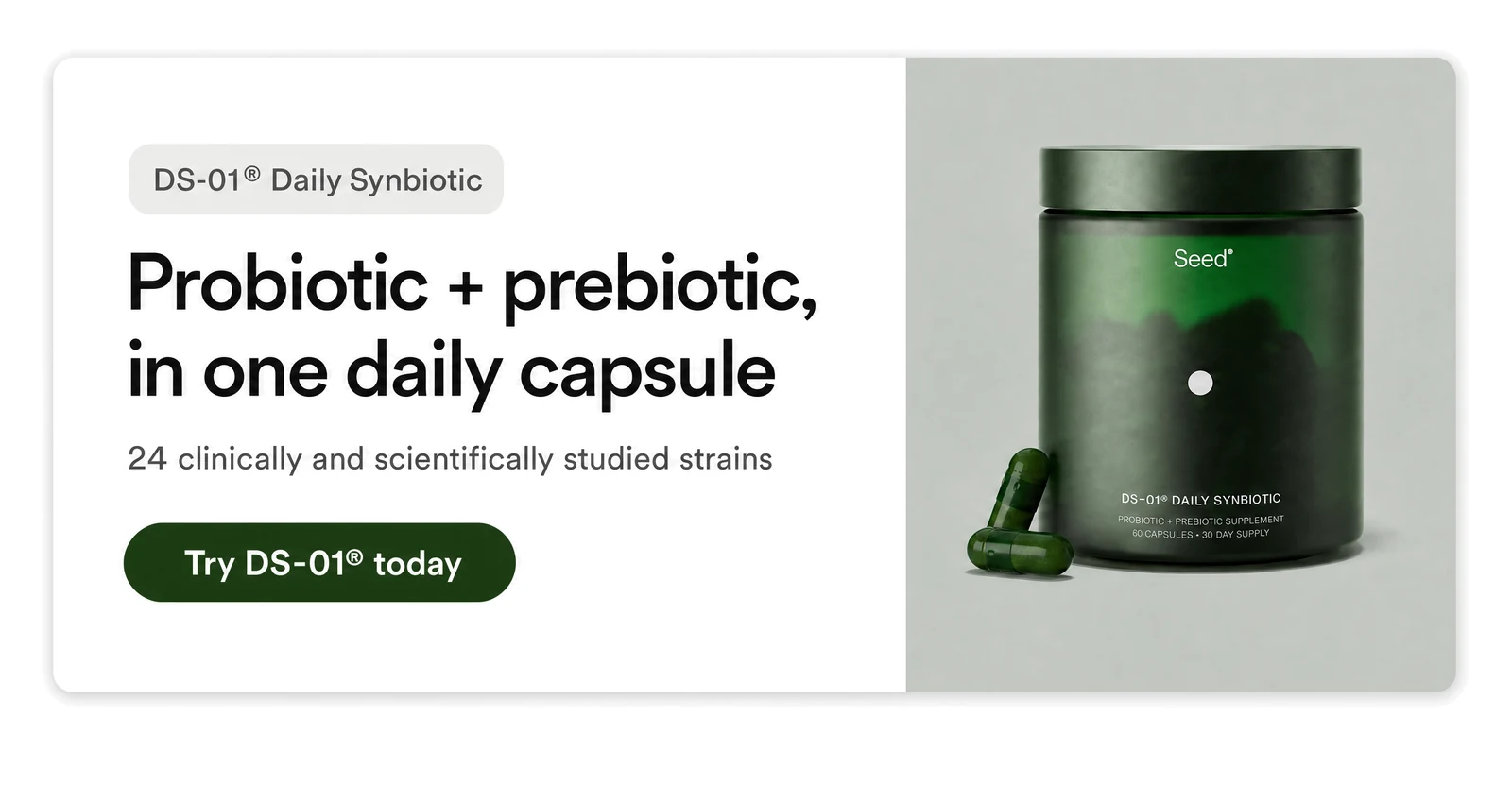
DS-01® Daily Synbiotic includes 24 clinically studied probiotic strains, including multiple species of Lactobacillus and Bifidobacterium genera that target digestive functions. DS-01® has been shown in preclinical research to deliver a 17x increase in beneficial bacteria.10 °Δ Its ViaCap® delivery technology helps ensure these strains survive digestion and reach the colon, where they do their work.
“We think about gut health as an ecosystem rather than a single intervention,” explains Dirk Gevers, Ph.D. “Tea polyphenols, dietary fiber, and targeted probiotic strains each play distinct biological roles, and they often work best when combined.”
The most science-backed approach isn’t tea or probiotics. It’s building daily habits that support your gut from multiple angles: a fiber-rich diet, polyphenol-rich foods and beverages like tea, and a clinically studied probiotic like DS-01® Daily Synbiotic that delivers strains shown to support digestive function and gut barrier integrity.
💡 Pro Tip: Think of tea as one layer in a gut health routine, not the whole strategy. Pair your daily cup with a diverse, fiber-rich diet and, when appropriate, a targeted probiotic. Each works through a different mechanism, and together they cover more ground than any one alone.
Your teacup is a surprisingly good starting point for digestive health, but it’s the first chapter, not the whole book. The research connecting tea polyphenols to your gut microbiome reveals something worth sitting with: your body doesn’t process these compounds in isolation. Your gut bacteria transform them, and the quality of that transformation depends on the ecosystem already living inside you.
That’s the thread connecting every part of this picture. Ginger and peppermint may ease symptoms in the moment. Green and black tea polyphenols can nourish the bacteria you already have. And a targeted, clinically studied probiotic can introduce the strains your gut might be missing. Each piece supports a different part of the same system.
The best gut health routines aren’t built on a single habit. They’re layered, daily, and rooted in what the science actually shows.
A healthy gut isn’t brewed in a single cup. It’s cultivated, one good habit at a time. 🌱
Peppermint tea. Its active compound, menthol, helps relax the smooth muscles in your digestive tract, which can ease that uncomfortable “too full” feeling. 3 Ginger tea is another strong choice, especially if your bloating comes with nausea or indigestion.1 Both are caffeine-free, so you can drink them at any time of day. Fennel tea is a third option that may support gut barrier function.7
Yes. Green tea polyphenols (particularly catechins) travel to your colon where gut bacteria break them down into bioactive metabolites. Research shows this process can increase populations of beneficial Bifidobacterium while reducing less desirable bacteria. One study found that drinking about 4–5 cups of green tea daily for 10 days increased the proportion of Bifidobacterium in stool samples.5 The catch? These effects depend on your existing gut microbiome composition. A healthy, diverse microbiome may metabolize tea polyphenols more effectively than a disrupted one.
It depends on your symptoms. Ginger tea is strongest for nausea and indigestion.1 Peppermint is best for bloating and gas.3 Green tea offers the most researched long-term microbiome benefits through its polyphenol content.5 There’s no single “best” tea for everyone because different teas work through different mechanisms on different parts of your digestive system.
Ginger tea. It’s a strong choice after meals, particularly if you’re prone to that heavy, sluggish feeling after eating. Research suggests ginger may help reduce indigestion symptoms.1 Peppermint tea is another post-meal option, though some people with acid reflux may want to be cautious: menthol can relax the muscle between your esophagus and stomach, which could worsen reflux in some cases.4 Chamomile tea is a gentler option that may help if your post-meal discomfort is connected to stress or tension.11
° These statements have not been evaluated by the Food and Drug Administration. This product is not intended to diagnose, treat, cure or prevent any disease.
Δ Lactobacillus.


Overview Bloating, unpredictable digestion, brain fog after meals—it’s no surprise your search history includes “best gut health supplement,” or that the wellness aisle of your local drugstore is packed with powders and pills that promise to fix your microbiome. But here’s where it gets interesting: gut support isn’t about chasing a miracle capsule. It’s about...

You've started taking probiotics, and now you're wondering: "Are they actually doing anything?"

Despite what low-carb diets may lead you to believe, carbs are not the enemy. In fact, they can strengthen your gut microbiome when chosen wisely.