Reference
DS-01® Daily Synbiotic
DS-01® comprises 24 scientifically studied probiotic strains with a patented, non-fiber prebiotic. This breakthrough formulation is paired with innovations in probiotic stabilization and a precision-release system to deliver strains to the lower small intestine and colon, which support systemic benefits and whole body health.*
Formulation
*Identical strain, formerly known as Bifidobacterium adolescentis SD-BA5-IT
Directions for Use
Take 1 capsule daily for the first three days.
On day four (or when you’re ready), increase to the full dose of 2 capsules at once, daily. Ideally, take both capsules on an empty stomach or at least 10 minutes prior to a meal.


Just as with any new diet, product, or change, you may experience a temporary acclimation period—some gastrointestinal discomfort, abdominal tightness, mild nausea, or changes in your stool. This can be very normal. In fact, an immediate physiological reaction is a sign that our probiotics are viable and attuning to your system. Any discomfort should subside within the first few weeks of consistent use.
If the discomfort does not subside, you may try experimenting with your DS-01® use. Try taking the capsules with food or one capsule in the morning and one in the evening.
Clinical Trials
DS-01® on Bloating and Irregularity
Bloating, gas, and irregular bowel habits are among the most common gastrointestinal complaints in the general population — yet most probiotic clinical research focuses on individuals with diagnosed GI conditions. Generally healthy adults experiencing these symptoms represent a significant, underserved population in the clinical literature. To address this gap, we conducted a randomized, double-blind, placebo-controlled trial in 350 generally healthy adults experiencing bloating/indigestion. Over 6 weeks, participants were evaluated for GI complaints and burden, including using validated clinical endpoints.
Participants taking DS-01 demonstrated a statistically significant reduction in bloating and gas compared to placebo, as measured by the NIH-GI PROMIS 13a. DS-01 also led to meaningful reductions in abdominal discomfort relative to placebo, assessed via the NIH-GI PROMIS 5a.
In terms of bowel habits, DS-01 supported improved regularity compared to placebo, with observed improvements in occasional constipation-related discomfort. Beyond symptom-level metrics, DS-01 improved GI-related quality of life compared to placebo as measured by the DQLQ — including greater food enjoyment, reduced food avoidance, and less disruption to physical activity due to digestive events, outcomes that reflect how digestive health is actually experienced in daily life.
By applying the same clinically rigorous tools used in GI condition research to a generally healthy population, at a scale not previously achieved in this category, this study established a higher evidentiary standard for what probiotic science can demonstrate. The findings show that the known mechanistic activity of DS-01 translates to real, measurable improvements in how people feel — across a population that has historically been excluded from this research.
Allegretty JR, et al. Nutrients. 2026 Jan 14;18(2):255
Learn about additional clinical trials supporting DS-01 here
Napier et al.,
Nutrients 2025
Napier et al.,
Antibiotics 2025
Napier et al.,
Digestive Disease Week 2024
Strain-Specific Benefit Studies
| Benefit | Studies |
|---|---|
| Digestive Health | Del Piano et al. J Clin Gastroenterol. 2010 |
| Gut Barrier Integrity | Iemoli et al. J Clin Gastroenterol. 2012 ‡ Magistrelli et al. Front Immunol. 2019†† |
| Gut Immune Axis | Olivares et al. J Agric Food Chem. 2011 Iemoli et al. J Clin Gastroenterol. 2012‡ Drago et al. Allergy Asthma Immunol Res. 2015 Magistrelli et al. Front Immunol. 2019†† |
| Cardiovascular Health | Costabile et al. PLoS One. 2017 Bordoni et al. Appl Microbiol Biotechnol. 2013 Keleszade et al. J Func Foods. 2022 |
| Dermatological Health | Iemoli et al. J Clin Gastroenterol. 2012‡ Climent et al. Microorganisms. 2021††† Navarro-López et al. JAMA Dermatol. 2018††† |
| Micronutrient Synthesis | Bron et al. I J Mol Sciences. 2021 Strozzi & Mogna. J Clin Gastroenterol. 2008 Pompei et al. Appl Environ Microbiol. 2007 |
| Gut Microbial Balance | Drago et al. Allergy Asthma Immunol Res. 2015 Magistrelli et al. Front Immunol. 2019†† |
| Benefit | Studies |
|---|---|
| Digestive Health | Del Piano et al. J Clin Gastroenterol. 2010 |
| Gut Barrier Integrity | Iemoli et al. J Clin Gastroenterol. 2012 ‡ Magistrelli et al. Front Immunol. 2019†† |
| Gut Immune Axis | Olivares et al. J Agric Food Chem. 2011 Iemoli et al. J Clin Gastroenterol. 2012‡ Drago et al. Allergy Asthma Immunol Res. 2015 Magistrelli et al. Front Immunol. 2019†† |
| Cardiovascular Health | Costabile et al. PLoS One. 2017 Bordoni et al. Appl Microbiol Biotechnol. 2013 Keleszade et al. J Func Foods. 2022 |
| Dermatological Health | Iemoli et al. J Clin Gastroenterol. 2012‡ Climent et al. Microorganisms. 2021††† Navarro-López et al. JAMA Dermatol. 2018††† |
| Micronutrient Synthesis | Bron et al. I J Mol Sciences. 2021 Strozzi & Mogna. J Clin Gastroenterol. 2008 Pompei et al. Appl Environ Microbiol. 2007 |
| Gut Microbial Balance | Drago et al. Allergy Asthma Immunol Res. 2015 Magistrelli et al. Front Immunol. 2019†† |


Testing
Quality Control Testing Battery
DS-01® is tested for all 14 classes of allergens according to EFSA and verified to be below the ED01.
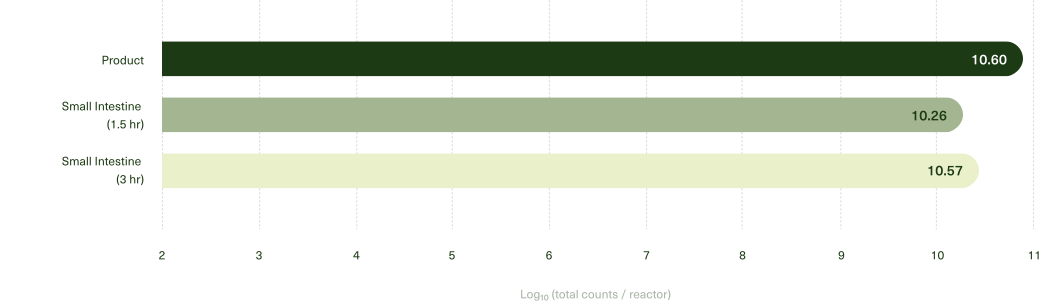
At the three hour mark of incubation, the ViaCap® delivered a maximal release of probiotics maintaining the full value of the starting dose (10.57 log vs 10.60 log, or about 100%), indicating viability through the end of the small intestine for delivery into the colon. The ViaCap® was engineered for a precision release of the contents of the inner, probiotic capsule, through the small intestine, resulting in full delivery of label potency prior to entering the colon chamber.



Interactions
DS-01® has no known contraindications with medications or supplements. However, if you are currently taking prescription medication, have an underlying medical condition, are pregnant or nursing, or if you have questions regarding your specific health needs, you should consult with your personal physician prior to use so that they may advise with the complete knowledge of your health history.
Can I take too many probiotics?
Unlike with some vitamins and minerals, probiotics do not have established recommended upper limits, and clinical literature has not generally shown them to reach levels of toxicity. In fact, probiotics have been clinically studied for certain indications in CFU dosages that reach the trillions. It is important to note, more is not necessarily better—the best dose per strain is the one shown in human clinical trials to have the intended health benefit.
Can I take DS-01® with other probiotics?
Many DS-01® users take other supplements, including additional probiotics. While there are no known adverse effects from combining these formulations, there may be some functional redundancy when combining microbial strains in the Lactobacillus and Bifidobacteria genera. To ensure a streamlined and effective protocol, we suggest reviewing your full supplement regimen with your physician or a healthcare professional.
Reference Library
FormulationSupplement Facts
Serving Size 2 Capsules
Servings Per Container 30
Amount Per Serving
ViaCap®• Probiotic Inner Capsule
Digestive Health / Gut Immunity / Gut Barrier Integrity Probiotic Blendº
37.0 Billion AFU*
Bifidobacterium longum SD-BB536-JP, Bifidobacterium breve SD-BR3-IT, Lactiplantibacillus plantarum SD-LP1-IT, Lacticaseibacillus rhamnosus SD-LR6-IT
Lacticaseibacillus rhamnosus HRVD113-US, Bifidobacterium infantis SD-M63-JP, Bifidobacterium lactis SD-BS5-IT, Bifidobacterium lactis HRVD524-US, Lactobacillus crispatus SD-LCR01-IT, Lacticaseibacillus casei HRVD300-US, Bifidobacterium breve HRVD521-US, Bifidobacterium longum HRVD90b-US, Bifidobacterium lactis SD150-BE, Limosilactobacillus fermentum SD-LF8-IT, Lacticaseibacillus rhamnosus SD-GG-BE, Limosilactobacillus reuteri RD830-FR
Dermatological Health Probiotic Blendº
3.3 Billion AFU*
Ligilactobacillus salivarius SD-LS1-IT, Bifidobacterium
lactis SD-CECT8145-SP, Bifidobacterium longum SD-
CECT7347-SP, Lacticaseibacillus casei SD-
CECT9104-SP
Cardiovascular Health Probiotic Blendº
5.25 Billion AFU*
Lactiplantibacillus plantarum SD-LPLDL-UK, Bifidobacterium lactis SD-MB2409-IT
Micronutrient Synthesis Probiotic Blendº
8.05 Billion AFU*
Bifidobacterium adolescentis SD-BA5-IT, Limosilactobacillus reuteri SD-LRE2-IT
Total Probiotic Enumeration‡
53.6 Billion AFU*
ViaCap® • Prebiotic Outer Capsule
MAPP Microbiota-Accessible Polyphenolic Precursors™️
400 mg*
Indian Pomegranate [rind + arils] (Punica granatum) (>40% polyphenolic + phenolic bioactives)
Daily Value (DV) is based on a 2000 calorie diet.
* Daily Value not established.
‡AFU = Active Fluorescent Units (indicator of probiotic viable cell count)
Other Ingredients: Acid-Resistant Vegan Outer [chlorophyllin] and Inner [hypromellose, water] Capsules, organic rice fiber, organic rice extract blend.
For Optimal Results: Take 2 capsules at once, daily, ideally on an empty stomach. No refrigeration necessary.
Women who are pregnant or planning a pregnancy should consult their doctor before taking supplements. Keep out of reach of children. Do not use if seal is broken.
Developed by Seed Health, Inc., Venice, CA 90291. Seed®, DS-01®, and ViaCap® are registered trademarks, and MAPP Microbiota-Accessible Polyphenolic Precursors™ is a trademark of Seed Health, Inc.
º These statements have not been evaluated by the Food and Drug Administration. This product is not intended to diagnose, treat, cure, or prevent any disease.