Fiber and probiotics can share a routine, but they play different roles. Some fibers act as prebiotics that feed resident gut microbes, while probiotic strains may help support digestive function. Learn which fiber types matter, when synbiotics make sense, and how to add fiber gradually.
Fiber and probiotics can work together to support a variety of systems and functions in the body.
Some fibers are prebiotics, meaning they serve as food for beneficial gut bacteria. Different types of prebiotics and fibers support different probiotic species.
Some synbiotic products (probiotics + prebiotics together) use non-fiber-based prebiotics (e.g., punicalagins).
When prebiotics and probiotics work together, they can enhance digestion and support immune function.
Gradually increasing fiber intake allows your gut microbiome to adapt, reducing the likelihood of temporary bloating or digestive discomfort.
Consume fiber-rich whole foods in addition to probiotics to get the most comprehensive support for your microbiome.
You’ve just remembered to take your daily probiotic, and now you’re wondering: should fiber be part of the equation too? 🤔
Fiber and probiotics are worth understanding together if you’re looking to support your gut health, but they don’t do the same job. And not all fiber is the same when it comes to feeding your microbial allies. Here’s how the two work together, what the science says about the pairing, and how to find the right balance for your digestive system.
How Do Fiber and Probiotics Work Together?
Fiber and probiotics can complement each other, but the relationship isn’t one-size-fits-all. Probiotics are live microbes shown to benefit health at the amount used. Some prebiotics are fibers that resident gut microbes can use. As microbes break them down, they may make short-chain fatty acids.1
That means fiber ≠ automatic fuel for every probiotic you take. The result depends on the fiber, the microorganism, the person, and the outcome being studied.
What Happens When Fiber Reaches Your Gut Bacteria
When you consume fiber and probiotics, fiber helps support a healthy environment in your gut microbiome, one where beneficial bacteria, including the ones already there, can thrive.2,3 Think of fiber as fertilizer for your gut garden: just as plants need the right soil to grow, your gut microbes need a variety of fibers to stay active and balanced.
Here’s what happens when fiber and probiotics meet in your digestive tract:
Fiber Fuels Fermentation: Unlike other nutrients, most dietary fiber resists digestion in the small intestine. Instead, it makes its way to the colon, where it’s fermented by resident gut microbes. This fermentation produces short-chain fatty acids (SCFAs), including acetate, propionate, and butyrate, which help support gut health. While some probiotic strains may participate in this process, it’s primarily your native microbiota that drive SCFA production.4
SCFAs Support Gut Health: These fatty acids help nourish the cells lining your colon and play a key role in maintaining the gut barrier, the protective layer between your digestive tract and the rest of your body.4 SCFAs may also support a healthy inflammatory response and immune function.4,5
Bacterial Growth and Diversity: A fiber-rich diet helps support a healthy gut environment where probiotic bacteria can thrive and potentially outcompete less helpful microbes.3,6
🔬 Science Translation: Most fiber travels to your colon, where your own gut bacteria break it down into short-chain fatty acids that help nourish your gut lining. Some probiotic strains may pitch in, but your resident microbes do most of the work.
Soluble vs. Insoluble Fiber: Why the Type Matters for Gut Bacteria
Different gut microbes use different types of fiber, which is why variety matters. Fiber is typically classified as either soluble or insoluble, and most fiber-rich foods have a mix of both.
Soluble fiber dissolves in water to form a gel-like substance and may help regulate blood sugar and lower cholesterol. Insoluble fiber doesn’t dissolve in water and adds bulk to stool, helping to keep digestion moving. Some soluble fibers also act as prebiotics, meaning they selectively feed beneficial bacteria.
Human research shows why the type matters. In 2019, researchers reviewing whole cereal fibers, including wheat bran, found they can change the range of gut microbes in healthy adults.7 In a 2022 trial, adults with excess weight felt fuller after taking corn bran arabinoxylan, and their bodies also responded better to insulin.8 Those findings apply to the fibers and groups studied, not every fiber on the grocery shelf.
Types of soluble fiber include:
Inulin and Fructooligosaccharides (FOS): Found in foods like chicory root, Jerusalem artichokes, and bananas, these fibers nourish Bifidobacterium, Bacteroides, and Lactobacillus species.9
Galactooligosaccharides (GOS): Present in legumes and synthesized from lactose, GOS supports both Bifidobacterium and Lactobacillus species.6,9
Resistant Starch: Found in legumes, green bananas, and cooked/cooled potatoes, this type of starch bypasses digestion in the small intestine and becomes food for your gut bacteria.10
Beta-glucans: Oats, barley, and mushrooms contain these prebiotics that support both beneficial bacteria and immune function.11
The more diverse your fiber and prebiotic intake, the more varied bacterial species you’ll support. It’s like offering a smorgasbord for your microbial community.
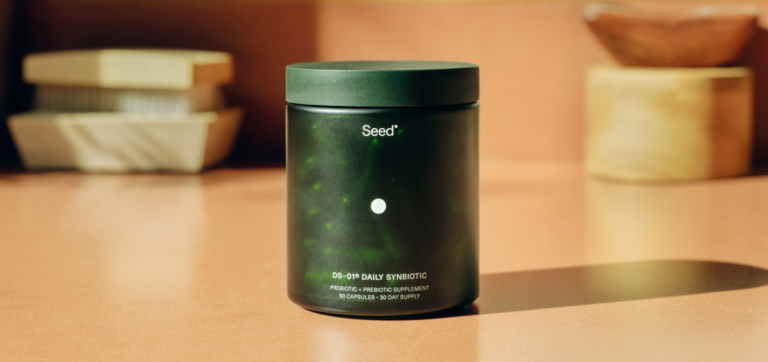
🌱 Seed’s DS-01® Daily Synbiotic pairs probiotic strains (which have been studied in clinical trials) with a unique, non-fiber prebiotic. Unlike traditional fiber-based prebiotics, it works through polyphenol metabolism instead of fermentation.
What Are the Health Benefits of Fiber and Probiotics?
Fiber and probiotics are both studied for more than regularity. But there’s no guaranteed “dynamic duo” outcome: results vary by fiber type, probiotic strain or formula, study group, and the outcome measured.
Fiber and Probiotics for Digestive Health and Regularity
Fiber and probiotics each support digestive function on their own. Together, they may help you poop better.
Improved Stool Consistency and Frequency: The combo may help normalize bowel movements. Insoluble fiber adds bulk, while probiotics help keep beneficial bacterial communities thriving with soluble fiber as fuel.12,13,14
Reduced Bloating and Gas Over Time: Though initial increases in fiber alongside probiotics may temporarily increase gas, studies suggest this combination may support more normal gut fermentation patterns over time.15,16
Enhanced Gut Function: Certain probiotic strains may support gut barrier function by influencing markers of intestinal permeability (how easily substances pass through the gut lining), such as zonulin and endotoxins. This may support a balanced inflammatory response and contribute to more consistent nutrient absorption.17
Fiber, Probiotics, and Immune Function
An estimated 70-80% of your immune cellslive in your gut,18 which is why the fiber-probiotic relationship matters for immune health:
Improved Barrier Function: The SCFAs produced when bacteria ferment fiber help maintain the gut lining’s integrity, supporting immune tolerance.4,19
Balanced Immune Responses: Together, healthy gut bacteria and the prebiotics that feed them may help maintain an immune response that’s appropriately active, without over- or under-reacting.20,21,22
Balanced Systemic Inflammation: Early research points to possible combined effects of fiber and probiotics on inflammation, but more research is needed to confirm this.17,23,24
Fiber, Probiotics, and Metabolic Health: Blood Sugar and Cholesterol
Researchers have also looked at how fiber and probiotics might influence blood sugar and cholesterol:
Blood Sugar Regulation: The fiber-probiotic partnership may support insulin sensitivity by increasing SCFA production in the gut, which could help promote more stable blood sugar levels.4,25
Cholesterol Management: Some studies suggest this combination can influence cholesterol metabolism, particularly by increasing the excretion of bile acids (which are made from cholesterol).23,26
Finding Your Fiber and Probiotics Balance
How Much Fiber Do You Need Each Day?
The National Institute of Health recommends a daily fiber intake of 25 grams for women and 38 grams for men. Most diets fall drastically short, with average intake around 15 grams.
Your needs and tolerance may differ. Think of daily fiber targets as a guide, not a finish line you need to cross overnight.
Increase your intake slowly, ideally with whole foods, which provide a variety of fibers. Sudden large increases in fiber intake can cause digestive discomfort, so patience pays off.27 (Going from zero to lentils at every meal is a fast track to a very gassy week. 😅)
When Should You Take Fiber and Probiotics?
You don’t need to take them at the same moment. Here’s what current research suggests:
Meals as Protection: The gut is a harsh environment, and not all probiotics survive the journey. Probiotic viability can be affected by formulation, physiology, and meal timing, but researchers haven’t reached a consensus on whether it’s best to have probiotics on a full or empty stomach. Some products are designed to be effective whether they’re taken with or without food, so the best time to take your probiotics is whenever it fits your routine. For example, DS-01® has been tested in a simulated in vitro model of the human gastrointestinal system (SHIME®), with recent results indicating that DS-01® performs well both in fasted (no food) and fed (after food) states.
Synbiotics Approach: Products that combine probiotics with targeted prebiotics (called synbiotics) are designed to support specific bacterial strains and are formulated to work together.28
Your Routine Matters More Than Pairing Them: You don’t need to eat fiber at the exact moment you take a probiotic. (No stopwatch required. ⏱️) Follow the directions for your specific probiotic, and focus on building a consistent pattern of fiber-rich foods that your gut tolerates.
If probiotics or high-fiber foods are new territory, you may experience temporary digestive adjustments, like gas or bloating.27 This is normal as your gut microbiome adapts, but starting slowly can help minimize initial discomfort.
When to Consider a Synbiotic (Probiotics + Prebiotics in One)
Synbiotics, products that contain both probiotics and prebiotics, offer convenience but aren’t necessarily superior to taking a probiotic and a fiber supplement separately or getting your fiber through food.
The advantage of synbiotics is that manufacturers can pair specific probiotic strains with the prebiotics (whether they’re from fibers or other sources) that best support them.29 However, a diverse diet rich in fiber-containing foods alongside a quality probiotic can offer similar benefits.29
💡 Pro Tip: Not all synbiotic products have prebiotics made from fiber, so check the label. In fact, taking a probiotic sans fiber may be the better route for those with certain conditions or GI issues.
🌱 For example, DS-01® pairs clinically studied probiotic strains with a unique, non-fiber-based prebiotic. Unlike common options like inulin or GOS, the special prebiotic in DS-01® is FODMAP-friendly and non-fermenting (i.e., it’s less likely to produce gas-inducing byproducts), making it a gentler choice for those with a sensitive gut.
How to Pair Fiber and Probiotics in Everyday Life
Fiber-Rich Foods to Pair With Your Probiotics
Rather than relying only on fiber supplements, consider adding fiber-rich foods that support probiotic activity:
Diverse Plant Foods: Eat a variety of fruits and vegetables each week to provide different fiber types that support different bacteria strains.29,30
Prebiotic-Rich Options: Include foods like garlic, onions, leeks, asparagus, bananas, apples, flaxseeds, and seaweed, which have specific fibers that beneficial bacteria love.2,29
Resistant Starch Sources: Incorporate cooked (and then cooled) potatoes or rice. Green bananas and legumes can also provide resistant starch.10 (Yes, leftover potatoes count. 🥔)
Fermented Foods: Include naturally fermented foods like sauerkraut or kimchi, which provide both live bacteria and fiber to feed them.29 Just know that live bacteria in food ≠ probiotics.
Common Challenges When Adding Fiber and Probiotics
If you’re new to probiotics, here are some common challenges and solutions:
Initial Digestive Discomfort: Start with small amounts of fiber and gradually increase to give your microbiome time to adjust. Using a variety of fiber sources rather than a large amount of one type can also help.9,27
Identifying Quality Products: Look for probiotics with clear strain designations (the letters and numbers after the species name) and evidence of benefits and testing for survivability.31
Building Your Fiber and Probiotics Routine
Consider these factors when deciding how to combine fiber and probiotics:
Your Current Diet: If your diet is already rich in diverse plant foods, you may not need as much supplemental fiber with your probiotic. (ℹ️ Remember:Current dietary guidelines recommend 25 grams of fiber daily for women and 38 grams for men.)
Health Goals: Specific combinations of fiber types and probiotic strains may support targeted benefits.24
Digestive Sensitivity: If you have digestive sensitivities, chat with your doctor about which fiber types you could increase.9
DS-01® features a proprietary prebiotic blend known as Microbiota-Accessible Polyphenolic Precursors™ (MAPP), sourced from punicalagins—bioactive compounds found in Indian pomegranate. Unlike fermentable prebiotics like inulin or GOS, this non-fermenting option may be easier to tolerate if you have sensitive digestion. (Here’s what you can expect after starting Seed’s DS-01® probiotic!)
⚕️ Always talk to your doctor before starting probiotics, especially if you’re pregnant, nursing, taking medication, or have a medical condition.
The Key Insight
Fiber and probiotics each support your gut on their own, and together they may reinforce digestive function, support immune responses, and influence metabolic health. How much depends on the type of fiber, the probiotic strain, and your own gut.
Diversity matters, both in the types of fiber you eat and the probiotic strains you take. Consistency beats perfect timing, and a gradual start helps minimize adjustment symptoms.
Rather than viewing fiber and probiotics as separate entities, think of them as partners in an ongoing relationship that nurtures your gut ecosystem. By nourishing both the microbes and their environment, you’re creating the conditions for long-term gut health.
Frequently Asked Questions (FAQs)
Can I Take Fiber Supplements with Probiotics?
Yes, you can take fiber supplements with probiotics. Some fibers act as prebiotics, which feed the beneficial bacteria in your gut. Taking prebiotics and probiotics together can form a helpful partnership for digestive health.2,3 Keep in mind that different types of probiotics prefer different types of fiber, so it’s worth reading the label.
If you’re new to fiber supplements or probiotics, start with smaller amounts to avoid temporary bloating or gas while your system adjusts.27
Does a High-Fiber Diet Make My Probiotics More Effective?
Maybe. A diet rich in diverse fiber sources provides fuel for beneficial bacteria, helping them thrive in your gut.2,30 Research shows that probiotics may be more effective when accompanied by enough dietary fiber.20,29 However, effectiveness depends on multiple factors, including the specific probiotic strains, your unique microbiome composition, and overall gut health.6,27,28
Can Too Much Fiber Interfere with Probiotic Benefits?
Possibly. While fiber generally supports the gut microbiome, a sudden, dramatic increase in fiber intake alongside probiotics might cause temporary digestive discomfort, like bloating, gas, or altered stool consistency. These symptoms are usually temporary as your gut adjusts.27 Research suggests that these symptoms tend to improve after consistent probiotic use.12,13,14
Does the Type of Fiber Matter for Probiotic Effectiveness?
Yes, different beneficial bacterial species thrive on different types of fiber. For example, many Bifidobacterium species particularly benefit from inulin and fructooligosaccharides (FOS), while some Lactobacillus strains may get more use out of other prebiotic fibers.2,6,9A diverse intake of fiber types through varied plant foods generally supports a broader range of beneficial bacteria.
Citations
de Vos, W. M., Tilg, H., Van Hul, M., Cani, P. D. (2022). Gut microbiome and health: mechanistic insights. Gut, 71(5):1020-32. https://doi.org/10.1136/gutjnl-2021-326789
Bindels, L. B., Delzenne, N. M., Cani, P. D., Walter, J. (2015). Towards a more comprehensive concept for prebiotics. Nature Reviews Gastroenterology & Hepatology, 12(5):303-10. https://doi.org/10.1038/nrgastro.2015.47
Makki, K., Deehan, E. C., Walter, J., Bäckhed, F. (2018). The Impact of Dietary Fiber on Gut Microbiota in Host Health and Disease. Cell Host & Microbe, 23(6):705-15. https://doi.org/10.1016/j.chom.2018.05.012
Blaak, E. E., Canfora, E. E., Theis, S., Frost, G., Groen, A. K., Mithieux, G., Nauta, A., Scott, K., Stahl, B., van Harsselaar, J., van Tol, R., Vaughan, E. E., Verbeke, K. (2020). Short chain fatty acids in human gut and metabolic health. Beneficial Microbes, 11(5):411-55. https://doi.org/10.3920/BM2020.0057
Smith, P. M., Howitt, M. R., Panikov, N., Michaud, M., Gallini, C. A., Bohlooly-Y, M., Glickman, J. N., Garrett, W. S. (2013). The microbial metabolites, short-chain fatty acids, regulate colonic Treg cell homeostasis. Science, 341(6145):569-73. https://doi.org/10.1126/science.1241165
So, D., Whelan, K., Rossi, M., Morrison, M., Holtmann, G., Kelly, J. T., Shanahan, E. R., Staudacher, H. M., Campbell, K. L. (2018). Dietary fiber intervention on gut microbiota composition in healthy adults: a systematic review and meta-analysis. The American Journal of Clinical Nutrition, 107(6):965-83. https://doi.org/10.1093/ajcn/nqy041
Jefferson, A. & Adolphus, K. (2019). The Effects of Intact Cereal Grain Fibers, Including Wheat Bran on the Gut Microbiota Composition of Healthy Adults: A Systematic Review. Frontiers in Nutrition, 6:33. https://doi.org/10.3389/fnut.2019.00033
Deehan, E. C., Zhang, Z., Riva, A., Armet, A. M., Perez-Muñoz, M. E., Nguyen, N. K., Krysa, J. A., Seethaler, B., Zhao, Y. Y., Cole, J., Li, F., Hausmann, B., Spittler, A., Nazare, J. A., Delzenne, N. M., Curtis, J. M., Wismer, W. V., Proctor, S. D., Bakal, J. A., Bischoff, S. C., Knights, D., Field, C. J., Berry, D., Prado, C. M., Walter, J. (2022). Elucidating the role of the gut microbiota in the physiological effects of dietary fiber. Microbiome, 10(1):77. https://doi.org/10.1186/s40168-022-01248-5
Wilson, B. & Whelan, K. (2017). Prebiotic inulin-type fructans and galacto-oligosaccharides: definition, specificity, function, and application in gastrointestinal disorders. Journal of Gastroenterology & Hepatology, 32(Suppl 1):64-8. https://doi.org/10.1111/jgh.13700
Jayachandran, M., Chen, J., Chung, S. S. M., Xu, B. (2018). A critical review on the impacts of β-glucans on gut microbiota and human health. The Journal of Nutritional Biochemistry, 61:101-10. https://doi.org/10.1016/j.jnutbio.2018.06.010
Dimidi, E., Christodoulides, S., Scott, S. M., Whelan, K. (2017). Mechanisms of Action of Probiotics and the Gastrointestinal Microbiota on Gut Motility and Constipation. Advances in Nutrition, 8(3):484-94. https://doi.org/10.3945/an.116.014407
Yoon, J. Y., Cha, J. M., Oh, J. K., Tan, P. L., Kim, S. H., Kwak, M. S., Jeon, J. W., Shin, H. P. (2018). Probiotics Ameliorate Stool Consistency in Patients with Chronic Constipation: A Randomized, Double-Blind, Placebo-Controlled Study. Digestive Diseases & Sciences, 63(10):2754-64. https://doi.org/10.1007/s10620-018-5139-8
Araújo, M. M. & Botelho, P. B. (2022). Probiotics, prebiotics, and synbiotics in chronic constipation: Outstanding aspects to be considered for the current evidence. Frontiers in Nutrition, 9:935830. https://doi.org/10.3389/fnut.2022.935830
Lawton, C. L., Walton, J., Hoyland, A., Howarth, E., Allan, P., Chesters, D., Dye, L. (2013). Short term (14 days) consumption of insoluble wheat bran fibre-containing breakfast cereals improves subjective digestive feelings, general wellbeing and bowel function in a dose dependent manner. Nutrients, 5(4):1436-55. https://doi.org/10.3390/nu5041436
Neyrinck, A. M., Rodriguez, J., Taminiau, B., Amadieu, C., Herpin, F., Allaert, F. A., Cani, P. D., Daube, G., Bindels, L. B., Delzenne, N. M. (2021). Improvement of gastrointestinal discomfort and inflammatory status by a synbiotic in middle-aged adults: a double-blind randomized placebo-controlled trial. Scientific Reports, 11(1):2627. https://doi.org/10.1038/s41598-020-80947-1
Zheng, Y., Zhang, Z., Tang, P., Wu, Y., Zhang, A., Li, D., Wang, C. Z., Wan, J. Y., Yao, H., Yuan, C. S. (2023). Probiotics fortify intestinal barrier function: a systematic review and meta-analysis of randomized trials. Frontiers in Immunology, 14:1143548. https://doi.org/10.3389/fimmu.2023.1143548
Wiertsema, S. P., van Bergenhenegouwen, J., Garssen, J., Knippels, L. M. J. (2021). The Interplay between the Gut Microbiome and the Immune System in the Context of Infectious Diseases throughout Life and the Role of Nutrition in Optimizing Treatment Strategies. Nutrients, 13(3):886. https://doi.org/10.3390/nu13030886
Song, C., Chai, Z., Chen, S., Zhang, H., Zhang, X., Zhou, Y. (2023). Intestinal mucus components and secretion mechanisms: what we do and do not know. Experimental & Molecular Medicine, 55(4):681-91. https://doi.org/10.1038/s12276-023-00960-y
Zhou, P., Chen, C., Patil, S., Dong, S. (2024). Unveiling the therapeutic symphony of probiotics, prebiotics, and postbiotics in gut-immune harmony. Frontiers in Nutrition, 11:1355542. https://doi.org/10.3389/fnut.2024.1355542
Bernini, L. J., Simão, A. N., Alfieri, D. F., Lozovoy, M. A., Mari, N. L., de Souza, C. H., Dichi, I., Costa, G. N. (2016). Beneficial effects of Bifidobacterium lactis on lipid profile and cytokines in patients with metabolic syndrome: A randomized trial. Effects of probiotics on metabolic syndrome. Nutrition, 32(6):716-9. https://doi.org/10.1016/j.nut.2015.11.001
Sarita, B., Samadhan, D., Hassan, M. Z., Kovaleva, E. G. (2025). A comprehensive review of probiotics and human health-current prospective and applications. Frontiers in Microbiology, 15:1487641. https://doi.org/10.3389/fmicb.2024.1487641
Canfora, E. E., Jocken, J. W., Blaak, E. E. (2015). Short-chain fatty acids in control of body weight and insulin sensitivity. Nature Reviews Endocrinology, 11(10):577-91. https://doi.org/10.1038/nrendo.2015.128
Padro, T., Santisteban, V., Huedo, P., Puntes, M., Aguiló, M., Espadaler-Mazo, J., Badimon, L. (2024). Lactiplantibacillus plantarum strains KABP011, KABP012, and KABP013 modulate bile acids and cholesterol metabolism in humans. Cardiovascular Research, 120(7):708-22. https://doi.org/10.1093/cvr/cvae061
Yu, X., Gurry, T., Nguyen, L. T. T., Richardson, H. S., Alm, E. J. (2020). Prebiotics and Community Composition Influence Gas Production of the Human Gut Microbiota. mBio, 11(5):e00217-20. https://doi.org/10.1128/mBio.00217-20
Tierney, B. T., Van den Abbeele, P., Al-Ghalith, G. A., Verstrepen, L., Ghyselinck, J., Calatayud, M., Marzorati, M., Gadir, A. A., Daisley, B., Reid, G., Bron, P. A., Gevers, D., Dhir, R., Simmons, S. L. (2023). Capacity of a Microbial Synbiotic To Rescue the In Vitro Metabolic Activity of the Gut Microbiome following Perturbation with Alcohol or Antibiotics. Applied & Environmental Microbiology, 89(3):e01880-22. https://doi.org/10.1128/aem.01880-22
Markowiak, P. & Śliżewska, K. (2017). Effects of Probiotics, Prebiotics, and Synbiotics on Human Health. Nutrients, 9(9):1021. https://doi.org/10.3390/nu9091021
Rowland, I., Gibson, G., Heinken, A., Scott, K., Swann, J., Thiele, I., Tuohy, K. (2017). Gut microbiota functions: metabolism of nutrients and other food components. European Journal of Nutrition, 57(1):1-24. https://doi.org/10.1007/s00394-017-1445-8
Reid, G., Gadir, A. A., Dhir, R. (2019). Probiotics: Reiterating What They Are and What They Are Not. Frontiers in Microbiology, 10:424. https://doi.org/10.3389/fmicb.2019.00424
Sydni is a science writer with a background in biology and chemistry. As a Master's student, she taught bacteriology labs and conducted research for her thesis, which focused on the microbiology and genetics of symbiotic amoebae and bacteria. Her passion for translating complex scientific concepts into clear, engaging content later led to her role as Editor-in-Chief for a mental health blog. Outside of writing, she loves to learn about new things with her curious son.
Chelsea Jackle is a registered dietitian nutritionist and the SciCare Team Lead at Seed with expertise in digital health, dietary supplements, wellness coaching, and chronic disease management. With a strong foundation in health writing and science communication, she is dedicated to making wellness more accessible—translating complex science into clear, evidence-based guidance rooted in integrity and empathy.