Next Article
L-Glutamine for Gut Health: What This Amino Acid Can (and Can’t) Do for Your Gut
8 minutes
Peptides are trending in wellness, but your gut also produces its own. Learn what the research shows, how your gut microbiome shapes peptide signaling, and why supporting your microbial ecosystem may matter more than adding external peptides.

Scroll through wellness social media and peptides are everywhere. Fitness influencers swear by compounds like BPC-157. Longevity podcasts call them the next big thing in health. In just a few years, peptides have gone from the pharmacy shelf to a mainstream wellness obsession.
But “peptides” is a sprawling category. It includes well-established prescription drugs like insulin and GLP-1 medications, alongside experimental compounds like BPC-157 that have far less human evidence behind them. And despite the bold claims made about the peptides that aren’t approved for medical use, the science backing many of those purported benefits is still thin. 🦠
Peptides do play a real role in your gut, though. Your body already runs its own peptide system, one that helps regulate appetite, digestion, and the constant back-and-forth between your gut and brain. That’s the story worth understanding.
At their simplest, peptides are short chains of amino acids, the same building blocks that make up proteins. Your body produces them naturally. They act as signaling molecules that help regulate hormone activity, immune responses, and tissue repair.1
Peptides aren’t new to medicine. More than 80 peptide-based drugs have been approved for medical use, including familiar ones like insulin and oxytocin.2 GLP-1 agonists, the drug class behind Ozempic, are peptide-based too.
So when someone says “peptides work,” there’s real science behind that, in specific, well-studied contexts. What’s newer is the consumer peptide market: a growing number of products sold online, in wellness clinics, and across social media. Some are compounded by pharmacies. Others are marketed “for research use only.” And the claims range from evidence-supported to wildly speculative.
The gap between clinically validated peptide drugs and consumer-marketed peptide products is real, and oversight varies depending on the manufacturer, formulation, and intended use.3
Enthusiasm for peptides, driven by the broader “optimization” movement, has outpaced the evidence in many cases. That doesn’t mean every peptide product is worthless. It means the difference between what’s been rigorously tested and what’s been sold with a compelling story matters a lot.
Your gut is already one of the most active peptide-producing systems in your body. Your gastrointestinal tract continuously releases peptides that report your body’s nutritional and energy status back to your brain.4 You can think of them like text messages between your gut and brain: short, specific signals that keep everything coordinated.
A few of the main ones (each does more than one job, but here’s the gist):
These peptides do more than manage hunger. They’re involved in gut barrier function, immune signaling, and the broader communication loop between your gut and brain.
The community of microbes living in your gut may influence how these peptides are released and how they function.5
“The gut and its microbiome are in constant communication,” says Dirk Gevers, Ph.D. “Cells lining the intestine produce signaling peptides that help regulate appetite, digestion, and barrier function, while microbial metabolites influence how those signals are generated and interpreted. It’s a dynamic two-way conversation.”
Bioactive peptides, the ones produced when you digest food proteins, may also interact directly with your gut microbiota.6 Some are even produced as a byproduct of certain Lactobacillus and Bifidobacterium strains, though so far that’s been shown mainly in the lab, and specific human research is still needed to explore it.7
In one randomized trial, a combination of wheat-derived bioactive peptides and fucoidan influenced gut microbiota composition, adding to the evidence for this peptide-microbe link.8 The relationship runs both ways: your microbes help shape peptide signaling, and certain peptides can help shape your microbes.
BPC-157 and KPV are two commonly promoted peptides for gut health, and they’re the names you may run into first.
BPC-157 (Body Protection Compound-157) is a peptide that comes from a protein found naturally in human gastric juice, the fluid in your stomach. In preclinical studies (animal models and cell cultures), it has shown potential to support tissue repair throughout the digestive tract and to calm inflammation in models of gut injury.9 It’s one of several peptides researchers are now exploring for gut health.10
Those early results are worth attention. But most of this evidence hasn’t been confirmed in robust human clinical trials. BPC-157, among many other peptides, is also popular in orthopedic and sports medicine circles, and a recent review from that field noted a current lack of human evidence to support the clinical use of many popular injectable peptides.11
KPV is a tiny fragment, just three amino acids, of a hormone your body makes naturally called alpha-MSH (alpha-melanocyte-stimulating hormone). In lab and animal studies, it has shown anti-inflammatory effects, particularly in models of intestinal inflammation.12 Like BPC-157, its human clinical data remains limited.
👉 TL;DR: BPC-157 and KPV look promising in animal and cell studies, but human evidence is still thin. For now they’re better understood as early science than as proven peptides for gut health.
Even the bioactive peptides in food come with open questions. Researchers note that we still need to establish how well these peptides are absorbed, how they interact with gut microbiota, and whether they produce real benefits in people rather than just in the lab.6
Until that research catches up, the distance between early promise and proven benefit is something to take seriously. If you’re considering peptide therapy, working with a knowledgeable healthcare provider who can walk you through the current evidence, safety, and its limits, is the best place to start.
So if the consumer peptide market is still catching up to its claims, what can you actually do to support your gut’s peptide signaling and overall digestion?
One approach with a strong evidence base: supporting the microbial ecosystem that helps keep your gut running. Your gut microbiome does more than digest food. It helps maintain the gut barrier, produces beneficial metabolites, and influences how your body’s own peptides function.4,13 A diverse, well-supported microbiome gives your gut more tools to work with.
Diet is one clear path. Fiber-rich foods, fermented foods, and an overall varied diet all support microbial diversity. Because these pieces are interconnected, the goal is to nurture the whole ecosystem rather than chase any single input.
If you’re weighing whether to add probiotics to your routine, it helps to know they work through a different mechanism than peptides. DS-01® Daily Synbiotic is clinically studied and introduces live microorganisms that interact with your gut’s existing ecosystem.
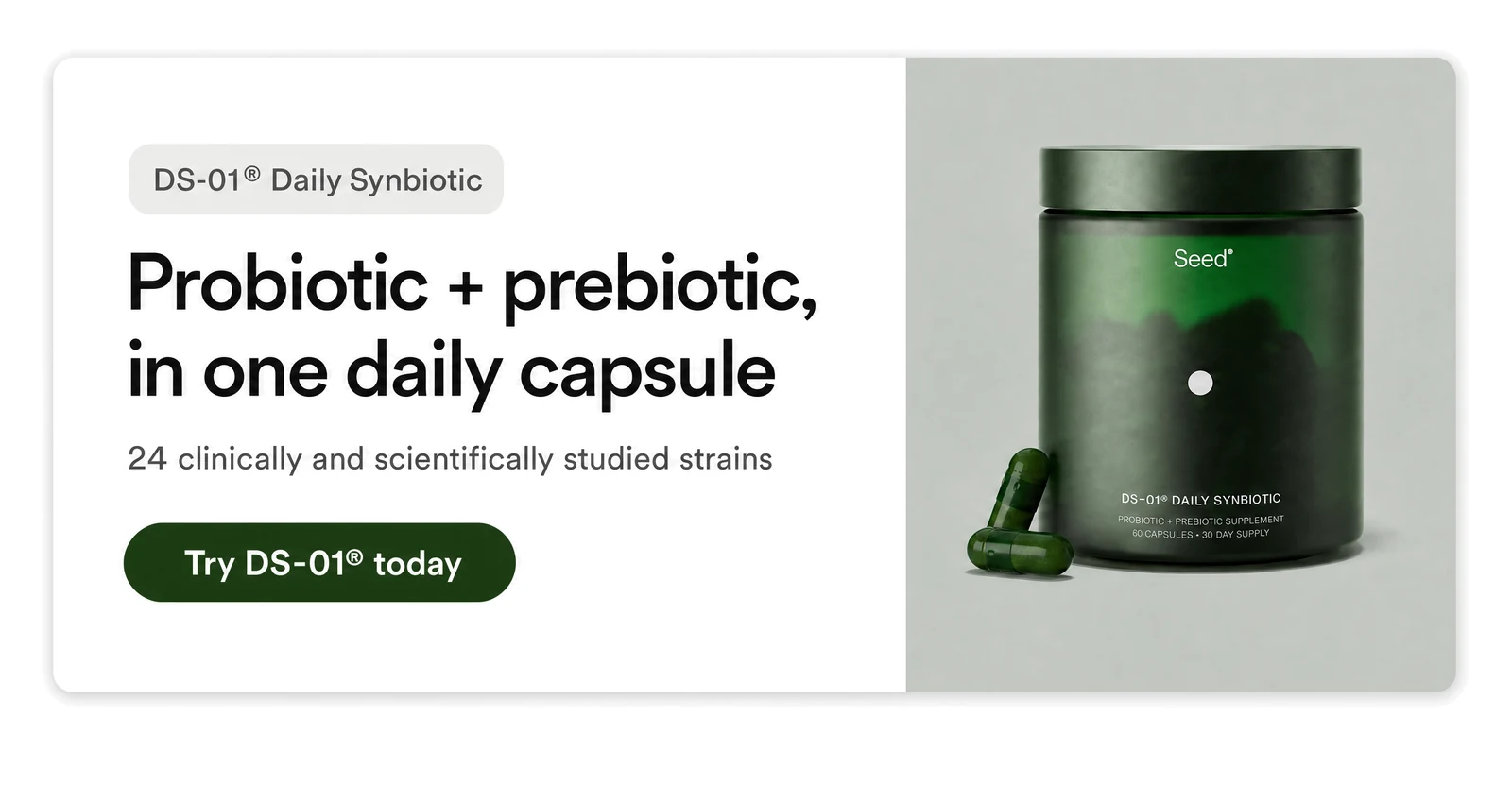
In fact, DS-01® was validated in the largest clinical trial for a probiotic on bloating and gas in healthy adults°µ. That was a 6-week, randomized, placebo-controlled trial of 350 participants.14 It supports gut barrier integrity° and increases beneficial bacteria in the gut microbiome°.
Think of your gut less like a machine that needs new parts and more like a garden that’s already growing. Peptides aren’t just a wellness trend — they’re a real, well-studied class of molecules your body relies on every day. Especially in your gut, where they help regulate digestion, appetite, and the steady conversation between gut and brain.
Your body produces many peptides, and your microbiome helps shape how that signaling works. Much of the consumer peptides getting so much attention right now? Many still lack human evidence, with real uncertainty about their effects, safety, and regulation.
An evidence-based path is to support the ecosystem that keeps your gut’s built-in systems running: a varied diet, consistent habits, and, for many people, targeted probiotic support that’s been tested in robust human trials.
Your gut’s intelligent ecosystem is already hard at work. Tending the environment it lives in is what helps it grow into a healthier, more resilient community. 🌱
It’s still unclear. BPC-157, derived from a protein in human gastric juice, has shown potential to support tissue repair and calm inflammation in animal and cell studies.9 However, most evidence comes from preclinical research, and large-scale human trials are still lacking. Given the limited human research available, reviewing the current evidence with a qualified healthcare provider may help inform individual decision-making.
Many consumer peptide products sit in a regulatory gray area. Unlike FDA-approved peptide drugs, peptides sold online or through wellness clinics may not have the same quality control, standardized dosing, or human clinical evidence behind them.3 Side effects, contamination, and impurities are added considerations, especially when products aren’t made under strict pharmaceutical standards, since impurities can trigger unwanted immune responses.15
Yes, Ozempic is a peptide-based drug. Semaglutide, the active ingredient, is a GLP-1 receptor agonist, meaning it mimics a peptide your gut produces naturally (GLP-1) which helps regulate blood sugar and appetite.4 Semaglutide has been through extensive clinical trials and holds FDA approval for specific conditions. The catch is that “peptides” covers a very broad category, from rigorously validated pharmaceuticals to consumer products with limited human evidence, so a peptide being a “peptide” tells you little about whether it’s been tested.
°These statements have not been evaluated by the Food and Drug Administration. This product is not intended to diagnose, treat, cure, or prevent any disease.
µas of February 2026


Overview Bloating, unpredictable digestion, brain fog after meals—it’s no surprise your search history includes “best gut health supplement,” or that the wellness aisle of your local drugstore is packed with powders and pills that promise to fix your microbiome. But here’s where it gets interesting: gut support isn’t about chasing a miracle capsule. It’s about...
Overview You’ve probably noticed your grocery store’s refrigerator aisle looks a lot different than it did five years ago. Between the kombucha, kefir, “probiotic” sodas, and tiny shot-sized bottles promising gut health, the live-culture beverage section has grown fast. The packaging is colorful, the promises are big, and the science is often nowhere on the...

Overview You know the feeling: it starts with a tickle, then a scratch, and before long, swallowing feels like an Olympic sport you never trained for. One look at your throat (or a rapid strep test) and the verdict is in—strep throat. That usually comes with a prescription for antibiotics, as it should. While you’re...