Next Article
Coffee and Gut Health: How Your Daily Brew Feeds the Right Bacteria
9 minutes
Drinks labeled as "probiotic" claim to be beverages containing live microorganisms, but most don't meet the scientific definition. Learn the key types, real benefits, what to watch out for (like sugar), and why strain identity matters more than the label.

You’ve probably noticed your grocery store’s refrigerator aisle looks a lot different than it did five years ago. Between the kombucha, kefir, “probiotic” sodas, and tiny shot-sized bottles promising gut health, the live-culture beverage section has grown fast. The packaging is colorful, the promises are big, and the science is often nowhere on the label. So here’s a fair question: are these drinks actually doing anything for you?
It depends, and not in a wishy-washy way. 🦠 It depends on something very specific that most labels won’t tell you: which strains are inside, how many of them, and whether any of them survive long enough to matter.
Just because a beverage contains live microorganisms doesn’t make it a probiotic.
The International Scientific Association for Probiotics and Prebiotics (ISAPP) defines a probiotic as a live microorganism that, when consumed in adequate amounts, confers a health benefit on the host.1 That definition rests on three requirements:
Most fermented foods and beverages don’t test for any of these. The bacteria in your kombucha or yogurt drink are more accurately described as “live dietary microbes.” You’re consuming organisms, yes, but without confirmed strain identity, dose, or evidence of benefit. This isn’t a knock on fermented beverages; many are nutritious and delicious. They may just not deliver the same targeted benefits as a clinically studied probiotic formulation.
So when you see “probiotic” on a drink label, treat it as a marketing term until proven otherwise. The real question is what’s actually inside, and whether any of it survives long enough to matter.
Not all drinks marketed as probiotic start the same way. Some are made through fermentation, where microbes naturally develop during the brewing process. Others have microbes added to a finished beverage. That distinction matters more than you might think.
Kefir is one of the most well-researched live-culture beverages out there. It’s typically a fermented milk drink (though dairy-free versions exist) made by adding kefir grains, small clusters of bacteria and yeast, to milk or water. The result is a tangy, slightly effervescent beverage packed with a diverse community of microorganisms.2
What makes kefir stand out is its natural strain diversity. A single serving can contain dozens of bacterial and yeast species, including several Lactobacillus and Bifidobacterium strains that have been linked to digestive and immune support.3 Research has associated kefir consumption with antibacterial activity, and anti-inflammatory effects.2
Kombucha is fermented sweetened tea, brewed using a symbiotic culture of bacteria and yeast (a SCOBY). The fermentation process produces organic acids, B vitamins, and a range of microbial species.4
The specific microbes in your kombucha will depend on the brand, brewing conditions, and how long it ferments. Some varieties also contain trace amounts of alcohol and caffeine, which is worth keeping in mind if those are concerns for you.
Drinkable yogurts are exactly what they sound like: yogurt thinned to a pourable consistency, often fermented with Lactobacillus and Bifidobacterium strains. Fermented dairy products like these are some of the most studied probiotic-containing foods in the scientific literature.5
The main thing to watch here is added sugar. Some commercial yogurt drinks can contain as much sugar as a can of soda, which may offset the benefits you’re hoping to get.
Sodas and flavored waters marketed as probiotic are the newest category on the shelf. Unlike kefir or kombucha, most of these drinks aren’t fermented. Instead, microbes are generally added to an already-made beverage.
The problem? Many of these products contain only one or two strains, often without disclosing the specific strain identity or the number of live organisms per serving. There’s also an open question about whether the microbes added to a non-fermented, acidic liquid can remain viable long enough to do anything meaningful and if they even make it to your gut alive when consumed.6
That doesn’t make every “probiotic” soda worthless. It does mean you’ll want to read the label carefully (we’ll get to what to look for shortly).
When probiotic organisms actually reach your gut alive and in sufficient numbers, the research is encouraging. Specific strains, like Lactiplantibacillus plantarum LP1 and Bifidobacterium breve BR3, have been studied for their ability to support digestive comfort, including bowel movement regularity, stool consistency, and reduced occasional bloating.7
Your gut is also home to about 70% of your immune system’s tissue, a network called gut-associated lymphoid tissue, or GALT. Certain probiotic strains interact with immune cells in the gut lining, helping to maintain healthy gut immune function and communication between immune and intestinal cells.8,9,10
The important nuance: health benefits are tied to specific strains at specific doses. The fact that a drink is labeled “probiotic” tells you almost nothing about what it can actually do for you. A generic kefir and a clinically tested multi-strain formula aren’t interchangeable just because both claim to contain live microbes.
The format, whether it’s a drink, a capsule, or a spoonful of yogurt, matters far less than three things: which strains are included, at what dose, and whether they survive to reach your lower intestine.
Benefits for probiotic organisms are assessed at the strain level. That means Lacticaseibacillus rhamnosus GG and Lacticaseibacillus rhamnosus LR6 are different strains with different bodies of evidence, even though they share a species name.11 When a product label just says “contains Lactobacillus” without naming the strain, there’s no way to know whether the research behind it applies to what’s in the bottle.
A clinically studied strain at a tested dose, delivered alive to the lower intestine, is a different kind of product entirely than an uncharacterized organism in a flavored beverage.
Many commercial live-culture beverages (especially kombucha, yogurt drinks, and “probiotic” sodas) contain added sugar. If you’re choosing a fermented beverage partly for gut health, high sugar intake has been linked to changes in gut microbiota composition that may work against the benefits you’re trying to get.12
That doesn’t mean you need to avoid all sweetened fermented drinks. It means paying attention and weighing the trade-off.
Do the bacteria in your drink actually survive the trip through your stomach acid? Many probiotic organisms are sensitive to the harsh, acidic environment of the stomach, and research has shown that the format and delivery system of a probiotic can dramatically affect how many viable cells reach their target site in the lower intestine.13 Liquid formulations without strain protection, in particular, may offer less protection than encapsulated formats designed to resist acid exposure.6
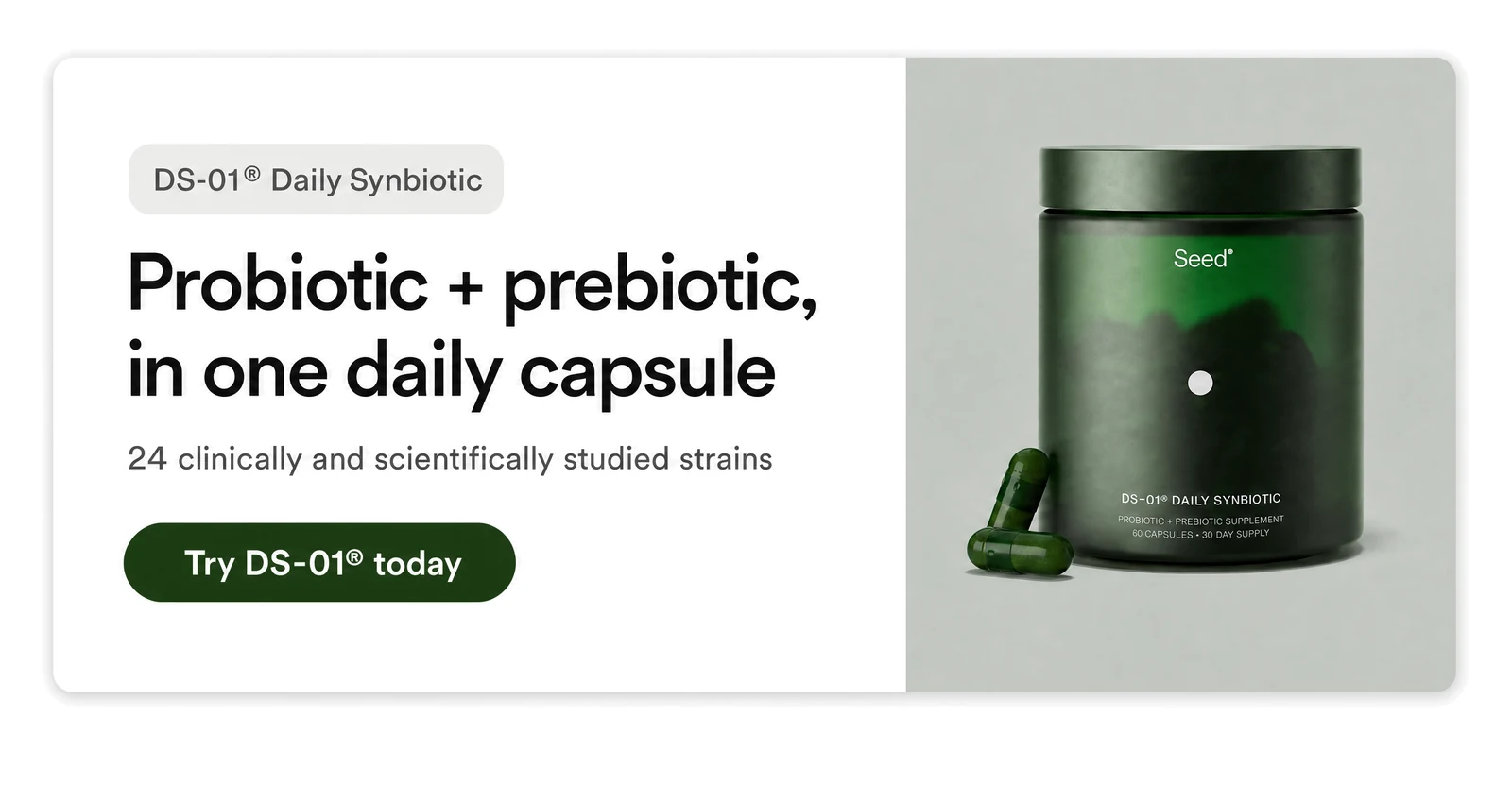
It’s one reason capsule-based options like DS-01® Daily Synbiotic use a registered delivery technology called ViaCap®, a nested capsule-in-capsule system that safeguards the viability of probiotic organisms through digestion. DS-01® has been tested using a Simulator of the Human Intestinal Microbial Ecosystem (SHIME®), with results confirming that strains arrive alive at the end of the small intestine where they do their best work.
Whether you’re reaching for a fermented beverage or a capsule, a few criteria matter more than the front-of-label promise.
The product should list specific strain names, not just genus and species. If a label says “Lactobacillus acidophilus” but doesn’t name the strain, you can’t necessarily verify the specific evidence behind it.
Look for the number of live organisms per serving, listed in CFU (colony forming units) or AFU (active fluorescent units).
Has the product been tested for how its bacteria survive storage, shipping, and digestion? Most brands can’t answer that question. The ones that can are worth your attention.
If you’re choosing a live-culture beverage, look for options with minimal added sweeteners.
Some products, including DS-01® Daily Synbiotic, combine 24 clinically studied probiotic strains with a non-fiber prebiotic, a polyphenol-rich extract from Indian pomegranate called Microbiota-Accessible Polyphenolic Precursors (MAPP). This two-part design reflects how your gut ecosystem actually works, supporting both the activity of beneficial microbes already in your gut and the delivery of new ones.14
Fermented beverages like kefir and kombucha can be a great addition to a varied, microbiome-friendly diet. They’re not the only path to supporting your gut, though, and they’re not always the most precise one.
A “probiotic” label is a forecast, not a guarantee. Beverages like kefir and kombucha can earn a place in your fridge for taste, tradition, and the simple pleasure of a tangy drink. A clinically studied formulation earns its place through tested strains, defined doses, and evidence that the organisms survive the trip to your lower intestine.
The difference between the two isn’t really about beverages versus capsules. It’s about what’s measured and what’s just printed on the front. Your gut doesn’t care what the bottle looks like. It cares about which microbes show up, in what numbers, and whether they’re still alive when they get there.
Look for a named strain, a tested dose, and proof it survives the journey and supports your health. That’s where real gut support takes root. 🌱
It’s hard to say with certainty. A drink labeled as probiotic claims to deliver live microorganisms to your digestive system, but most products don’t test for strain identity, dose, or survivability, which makes the actual effect ambiguous. In drinks where specific strains do reach the gut alive and in sufficient amounts, certain organisms can interact with your existing microbiota. The key word is “specific.” What a live-culture beverage does for you depends entirely on which strains it contains, scientifically validated benefits, and whether they arrive in your gut alive.
Enjoy them, but don’t expect guaranteed benefits. Live-culture drinks like kefir and kombucha can be part of a varied diet, but they aren’t true probiotics in the scientific sense, so daily consumption shouldn’t be framed as a guaranteed gut support. Even when probiotic organisms do reach your gut, they tend to be transient: they interact with your microbiome during use but don’t permanently set up camp.15 The bigger thing to watch is added sugar: some “probiotic” drinks can contain several grams of sugar per serving, which has been linked to shifts in gut microbiota composition that may work against the benefits you’re hoping for.12 Drink them for the taste and the live cultures, and look elsewhere for targeted, dose-defined support.
It’s a bit ambiguous. Without strain identity, dose information, and evidence of survivability on the label, ranking one drink as “healthiest” overlooks how little is actually verified about what’s inside. The most well-researched live-culture beverages, like kefir, have shown links to digestive and immune support, but those findings still depend on which strains the drink delivers and in what amounts.2 Plain, unsweetened versions help you sidestep added sugar. If you want personalized guidance, a registered dietitian can help you read labels and match a beverage to your goals; for targeted support, a clinically tested multi-strain formula may offer more than any fermented beverage.



In the last two decades, scientific exploration into the microbiome has skyrocketed, with over $1.7 billion spent on human microbiome research since 2009. 1 Advancements in sequencing technology empowered discoveries that elucidate the microbiome’s critical role in health and disease, charted the development of the infant microbiome, and have even begun to define how our...

Perspective shift incoming: Of the 18,532 scientific papers published on the microbiome this year, these are six that our team really wants you to know about.

Strategies for supporting digestive health beyond diet—from regulating your sleep timing to exploring your local park.