Next Article
Seed’s DS-01® Daily Synbiotic vs ARMRA Colostrum: Choosing the Right Ally for Your Gut
11 minutes
Seed, Hum, and Arrae all promise better gut health, but their formulas tell very different stories. We compare strains, prebiotics, delivery, and clinical testing across all three so you can see what's really inside each capsule and choose the one that fits your gut.
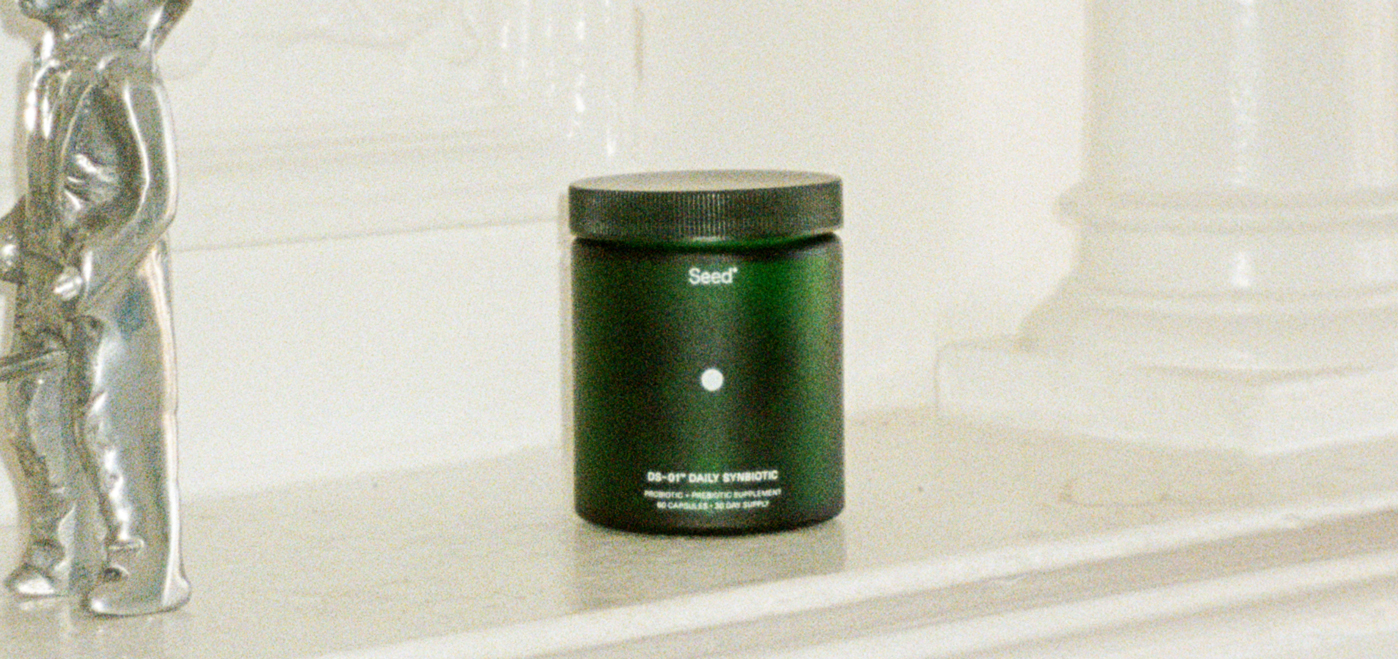
Standing in the supplement aisle (or three tabs deep on your phone) staring at probiotics, it’s easy to feel out of your depth. Every label promises a balanced microbiome and better digestion, and most of them wave the same big number at you: billions of bacteria. But a big number doesn’t tell you whether any of it survives the trip to your gut, or whether the formula has been tested as a whole. If you’ve ever wondered whether you’re paying for results or for expensive dust, you’re in good company.
So let’s compare three products people ask about constantly: Seed’s DS-01® Daily Synbiotic, HUM Gut Instinct, and Arrae Tribiotic. We’ll look at what’s actually inside each capsule, how it’s delivered, and how deeply it’s been studied, so you can decide based on your biology instead of the marketing. 💊
Before getting into the formulas, it helps to get the vocabulary straight. Microbiome science has its own jargon, and the difference between the “biotics” is where this comparison starts.
With that straight, Seed’s DS-01® is a synbiotic, HUM Gut Instinct is a probiotic-only product, and Arrae Tribiotic combines prebiotics, probiotics, a heat-treated postbiotic, and a bovine immunoglobulin.
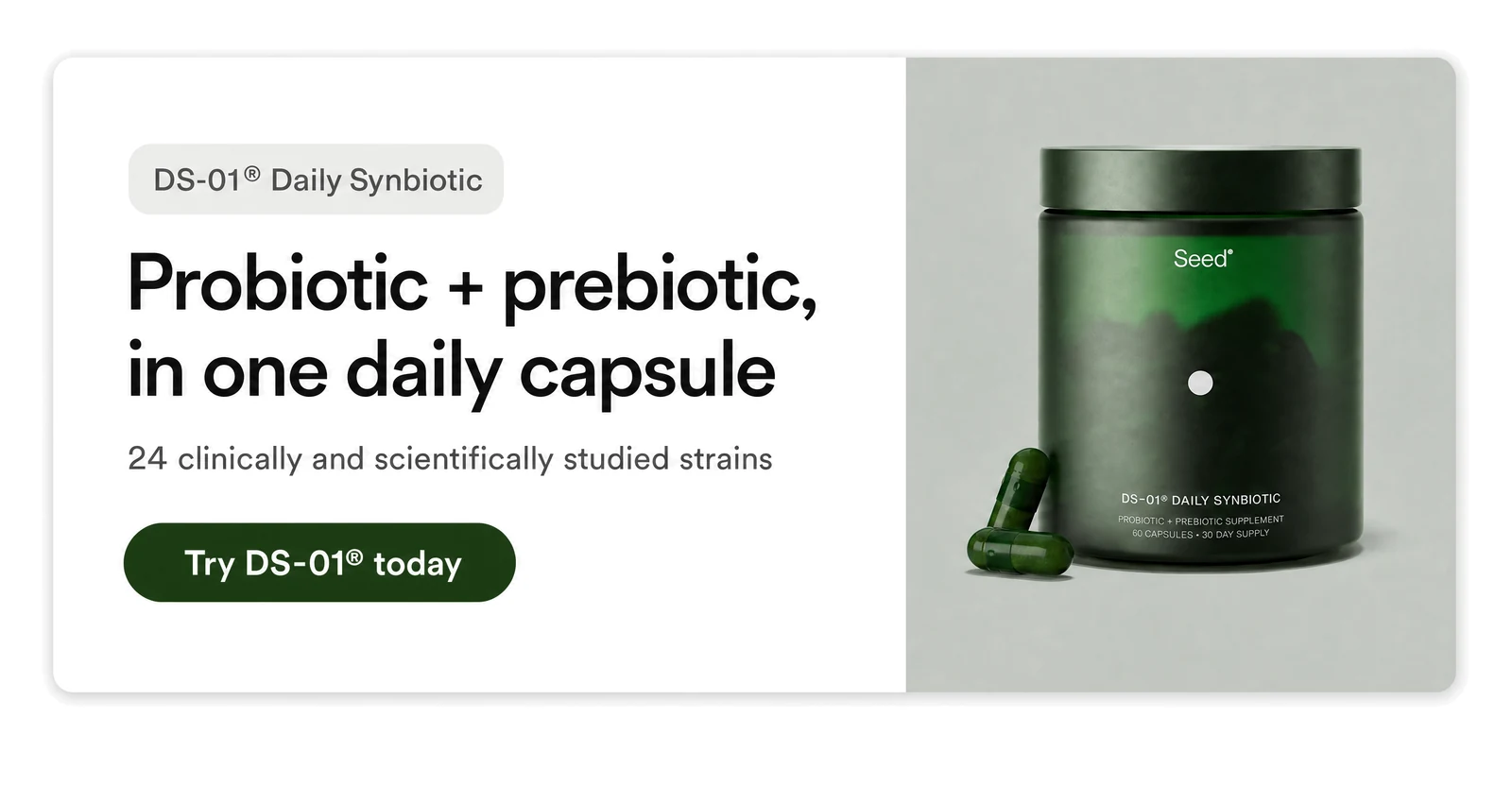
🔬 Science Translation: Think of your gut as a garden. Probiotics are the plants, prebiotics are resources microbes use, and synbiotics combine both. Postbiotics are preparations of inactivated microbes or their components. Each product here takes a different approach.
| Feature | Seed’s DS-01® Daily Synbiotic | HUM Gut Instinct | Arrae Tribiotic |
|---|---|---|---|
| Product Category | Synbiotic (probiotic + polyphenol prebiotic) | Probiotic-only formula | Prebiotic + probiotics + postbiotic, with bovine immunoglobulin |
| Probiotic Strains | 24 strains | 10 strains | 8 strains + 1 spore-forming strain |
| Live Cell Count | 53.6 billion AFU (2-capsule daily dose) | 25 billion CFU | 50 billion CFU (2-capsule daily dose) |
| Prebiotic Type | 400 mg MAPP™ from Indian pomegranate (non-fiber polyphenols) | None added | 400 mg xylooligosaccharide (XOS), a fermentable fiber |
| Postbiotic Component | None; gut microbes transform the prebiotic into metabolites in the body | None | 25 mg heat-treated B. longum |
| Delivery Technology | ViaCap® 2-in-1 nested capsule | Standard capsule; no specialized release system listed | Vegan capsule; no specific release technology identified in current product materials |
| Scientific Research Focus | Strain-specific research and published finished-product randomized, placebo-controlled trial 5 | Ingredient-level research; no finished-product trial identified | Ingredient- and strain-level research; no finished-product trial identified |
| Listed Price (supply) | $49.99 subscription | ~$27 list price | $49 one-time or $39.20/ subscription |
Seed built DS-01® around one goal: turn rigorous microbiome science into a formula that survives digestion and supports your gut once it gets there.
With probiotics, the specific strain matters—not just the species. DS-01® includes 24 distinct probiotic strains from the Bifidobacterium and Lactobacillus genera, with strain designations that help distinguish them from other members of the same species. Those designations make it easier to identify relevant strain-level research, but they don’t mean every strain or the finished formula has been shown to deliver every potential benefit.
DS-01® is a digestive-health synbiotic. Studies of its strains, ingredients, and finished formulation have examined several areas, but the strength of evidence varies by outcome. Here are the benefit claims for Seed’s synbiotic:
You’ll notice DS-01® lists its 53.6 billion cells in AFU (Active Fluorescent Units) rather than the more common CFU. AFU is measured using flow cytometry, which uses fluorescent markers to count cells based on their condition; CFU counts cells able to grow into colonies under specific lab conditions.
Flow cytometry can count viable cells that may not form colonies on a plate, but AFU and CFU are different measures and shouldn’t be treated as directly interchangeable.10
🔬 Science Translation: CFU counts the colonies that grow on a lab plate; AFU uses flow cytometry to count cells using fluorescent markers. The methods measure cells differently, so a bigger number alone doesn’t establish that one probiotic is better.
DS-01® pairs its strains with 400 mg of MAPP™ (Microbiota-Accessible Polyphenolic Precursors) from Indian pomegranate extract, which is full of fiber and antioxidants.
Unlike fermentable fibers that can trigger gas as they break down, these plant polyphenols aren’t fully absorbed up front. They travel to the gut, where microbes can transform them into compounds such as urolithins, which are being studied for their potential health effects.11,12
DS-01® uses a proprietary 2-in-1 nested capsule, ViaCap®: the inner capsule holds the probiotics, and the outer capsule holds the prebiotic. The system is designed to protect the bacteria from stomach acid and bile salts and support delivery to the lower intestine and colon. It also helps protect the formula from heat and moisture, so refrigeration isn’t required.
💡 Pro Tip: Starting any new daily synbiotic? Ease in. Seed recommends one DS-01® capsule daily for the first three days before moving to two. Some people experience a temporary adjustment period, which may include mild digestive discomfort or changes in stool.
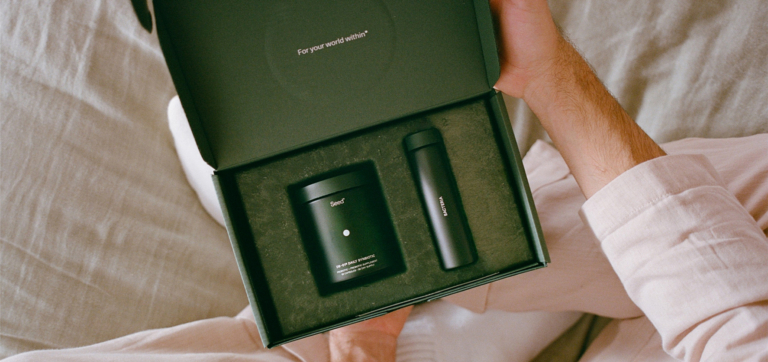
Your first month of DS-01® arrives in a refillable glass jar with a glass travel vial. After that, refills come in compostable pouches, cutting down on plastic waste while keeping your routine simple. ♻️
DS-01® doesn’t lean on ingredient-level data alone. It has been evaluated in the Simulator of the Human Intestinal Microbial Ecosystem (SHIME®) for survivability, and a randomized, double-blind, placebo-controlled trial evaluated the finished DS-01® formula in 350 generally healthy adults with self-reported bloating or indigestion over six weeks.
The study reported improvements in bloating, gas, abdominal discomfort, and bowel habits compared with placebo.5
HUM Gut Instinct takes a simple approach, focused on delivering a blend of probiotic bacteria without added prebiotics or specialized capsule technology.
HUM Gut Instinct provides 25 billion CFU across 10 probiotic strains from the Bifidobacterium and Lactobacillus genera. Some of its other listed bacteria are identified only by species, without a strain designation. Because probiotic research is strain-specific, findings for one strain shouldn’t automatically be applied to another strain of the same species.
HUM Gut Instinct is a probiotic-only product; it includes no added prebiotic. That means the formula doesn’t supply a separate prebiotic substrate, so the microbes interact with the gut environment and the person’s diet after ingestion.
A varied, fiber-rich diet can support the overall gut microbiome, but that isn’t the same as including a targeted prebiotic in the supplement.
The product comes in a standard vegan capsule. HUM recommends refrigerating the bottle after opening to slow the loss of viable bacteria. Its product FAQ says refrigeration isn’t necessary if the bottle is kept in a cool, dry place, while its support guidance says Gut Instinct must be refrigerated. Follow the current package directions.
Based on HUM’s product information, Gut Instinct is marketed to:
HUM Gut Instinct uses a standard capsule rather than a specialized nested or delayed-release system. However, capsule type alone doesn’t show how many live bacteria survive digestion, and a head-to-head survivability study comparing Gut Instinct with DS-01® wasn’t identified in the materials reviewed.
HUM says its products are formulated by registered dietitian nutritionists and use clinically tested active ingredients. Its public product materials emphasize ingredient testing and quality controls; a published clinical trial evaluating the complete Gut Instinct formula was not identified in the materials reviewed.
Arrae Tribiotic combines a prebiotic, probiotics, a heat-treated postbiotic, and an animal-derived immunoglobulin. Its full daily serving is two capsules; Arrae recommends starting with one capsule daily for the first two weeks before increasing to two.
Arrae Tribiotic provides a 50-billion-CFU blend. Its detailed ingredient list names eight conventional probiotic strains plus one spore-forming strain from Bacillus subtilis. Arrae’s product summary describes the blend as eight strains including one spore, so the count isn’t presented consistently across its page. Potential effects and safety considerations depend on the specific strain, rather than applying to all spore-formers.13
Beyond live bacteria, Arrae Tribiotic includes 400 mg of xylooligosaccharide (XOS) as its prebiotic fiber, 25 mg of a heat-treated postbiotic (Bifidobacterium longum CECT7347), and 250 mg of ImmunoLin®, a standardized bovine (beef) immunoglobulin concentrate.
XOS is a fermentable prebiotic fiber. Fermentable fibers feed gut microbes, and their breakdown can produce gases such as hydrogen and methane.14 For some people, that can mean temporary gas or bloating. Postbiotics are also an active area of research, and their effects depend on the specific preparation and context.15
One important note: because Arrae Tribiotic contains ImmunoLin®, a serum-derived bovine immunoglobulin isolate, it includes animal byproducts. It isn’t suitable for vegans or vegetarians. Anyone with a beef allergy should check with a healthcare professional before using it.
According to Arrae’s product materials, Tribiotic is claimed to:
Arrae states that Tribiotic doesn’t require refrigeration. Its current product materials list a vegan capsule but don’t identify a specific targeted-release system. Without comparative, product-specific survivability data, it’s not possible to conclude from capsule type alone how many viable bacteria reach the colon.
Arrae highlights research on individual strains and ingredients. A published clinical trial evaluating the complete Tribiotic formula was not identified in the materials reviewed, so the effects of the combination as a whole are less well established in publicly available product-level evidence.
The details matter here. All three are marketed for gut health, but they take different approaches:
Your microbiome is complex, and a product’s strain count is only one part of the picture. HUM Gut Instinct offers a probiotic-only formula, while Arrae Tribiotic combines several types of ingredients. DS-01® combines 24 identified probiotic strains with a ViaCap® delivery design and published clinical testing of the finished formula.
In a market full of promises, clarity is rare. Choose what’s seeded in science.
HUM recommends refrigeration after opening; the other two are described as shelf-stable. HUM’s product page and support guidance differ on whether refrigeration is necessary in all circumstances, so follow the current label.
Arrae says their Tribiotic doesn’t require refrigeration, and Seed describes DS-01® as shelf-stable. ViaCap® is designed to help protect DS-01®’s probiotic strains during storage and digestion.
In this comparison article, Seed and HUM are vegan. Seed’s DS-01® and HUM Gut Instinct are both fully vegan. Arrae Tribiotic isn’t; it contains ImmunoLin®, a bovine (beef) serum-derived immunoglobulin isolate.
It depends on the formula and the individual. Arrae Tribiotic uses a fermentable fiber (XOS), which may cause temporary gas and bloating for some people. DS-01® uses a non-fiber pomegranate polyphenol prebiotic, so it doesn’t produce gas through fiber fermentation in the same way. HUM has no added prebiotic, though individual responses to probiotic strains can still vary.
DS-01® has the most specialized delivery system described in these product materials. It uses a proprietary ViaCap® 2-in-1 nested capsule designed to protect the probiotics through digestion. HUM lists a standard capsule, and Arrae’s current product materials don’t identify a specific targeted-release technology.
Without head-to-head survivability testing, capsule design alone doesn’t establish the exact number of live bacteria that reach the colon.

Overview If you’ve ever browsed the probiotic aisle and wondered if you need a science degree just to pick a capsule, you’re definitely not alone. Probiotic ingredient lists can get real technical real fast, and every brand seems to promise to support your gut microbiome in its own unique way. Two of the brands that...
Overview Welcome to the comparison you didn’t know you needed—but your gut definitely does. You’ve probably seen countless options lining the shelves (or filling your social feeds), and two names that keep coming up are Seed’s DS-01® Daily Synbiotic and Visbiome. Both have scientific street cred, but here’s the thing: they’re playing completely different games....
Overview The probiotic aisle can be a lot — bold branding, “super strain” claims, and more “biotics” than anyone can keep straight. If you’ve narrowed it down to Seed’s DS-01® and Ritual Synbiotic+, here’s a straight side-by-side with the science behind each. 🦠 Both are synbiotics built to support your gut microbiome, but they take...