Next Article
Seed’s DS-01® Daily Synbiotic vs. The Nue Co. Pre + Probiotic: A Scientific Comparison
7 minutes
Seed’s DS-01 synbiotic or Florastor’s probiotic? One is a multi-strain bacterial synbiotic, and the other is a single-strain yeast probiotic. Which one is better for your goals? Here's how they differ in formulation, technology, research, and benefits.
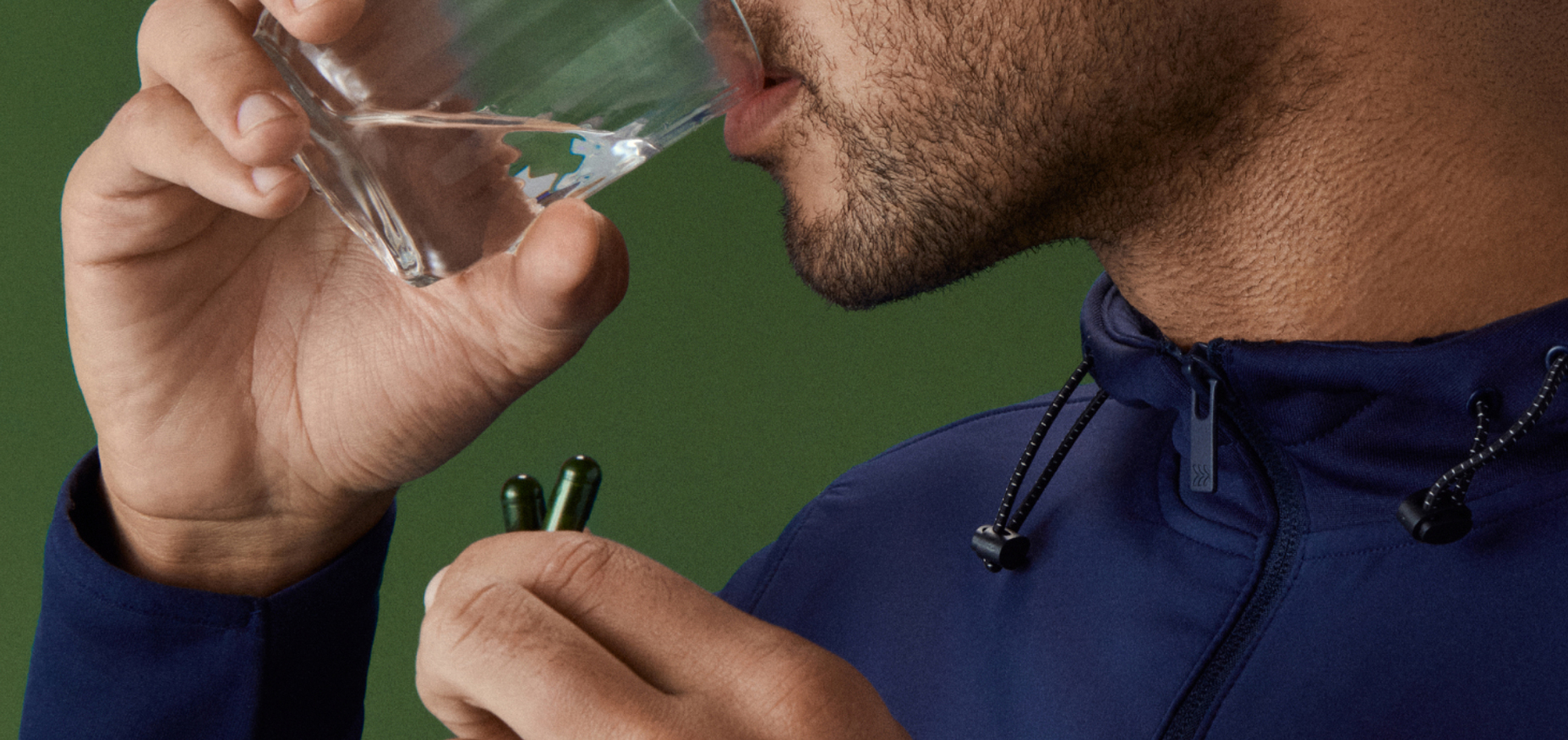
Seed’s DS-01® and Florastor both make appearances in gut-health conversations, but their labels tell very different stories: one is a broad team of bacteria, the other a single strain of yeast. That difference drives everything else — how they work, what they’re studied for, and who each one suits. Here’s how they compare. 🦠
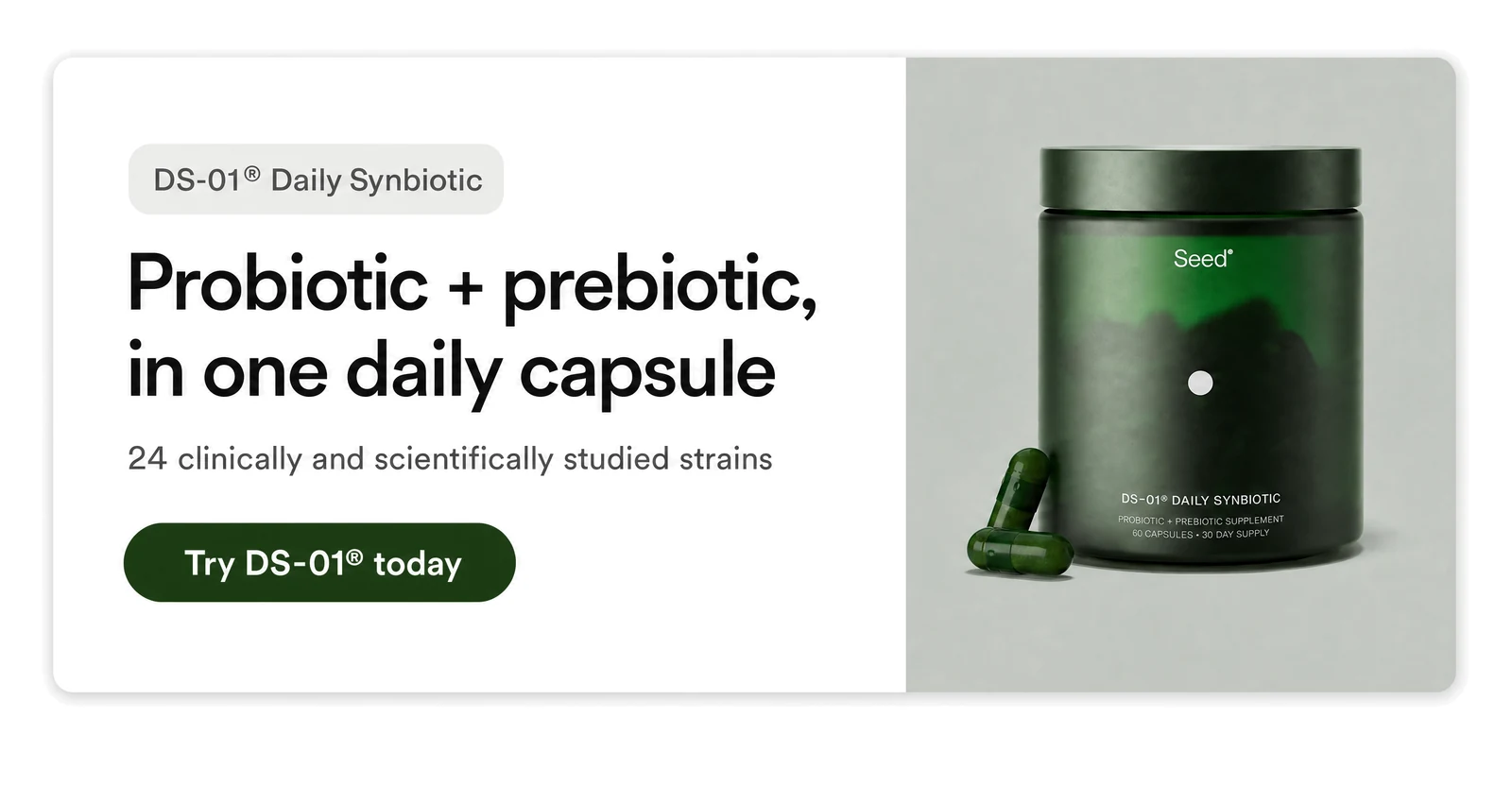
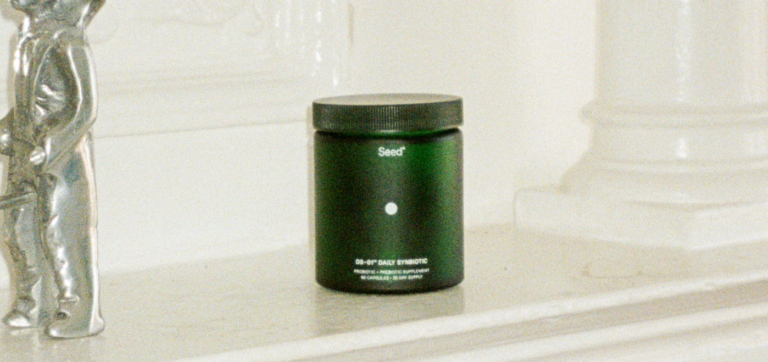
Seed’s DS-01® is a multi-strain, multi-species bacterial synbiotic — 24 scientifically studied probiotic bacteria paired with a plant-based prebiotic that fuels beneficial microbes. It’s designed to support whole-body, systemic health through the gut microbiome, not digestion alone.
Florastor is a single-strain yeast probiotic. Its active ingredient is a well-researched strain of beneficial yeast, Saccharomyces boulardii CNCM I-745, used mainly to support gut integrity during specific disruptions like a course of antibiotics.
These aren’t two versions of the same thing: a diverse team of bacterial specialists versus a single yeast specialist, each with a different job.
| Feature | Seed’s DS-01® Daily Synbiotic | Florastor Daily Probiotic |
|---|---|---|
| Category | multi-strain bacterial synbiotic (probiotics + prebiotic) | single-strain yeast probiotic |
| Active Organisms | 24 bacterial strains | 1 yeast strain |
| Live Cell Count | 53.6 billion AFU | 5 billion CFU |
| Prebiotic | 400 mg MAPP™ (pomegranate polyphenols, non-fermenting) | none |
| Delivery | ViaCap® 2-in-1 nested capsule | standard vegetarian capsule |
| Best Studied For: | daily, systemic support (digestion, gut barrier, heart, skin, micronutrients) | occasional and antibiotic-associated diarrhea, gut integrity. |
| Price (30-day supply) | $49.99 (subscription) | ~$37.99 (varies by retailer) |
DS-01® is built around an ecosystem approach — from how its strains are chosen to how they survive the trip to your gut. (Here’s how to tell if it’s working yet!)
DS-01® contains 24 probiotic strains, each selected on clinical evidence for a specific role — a coordinated team where each member has a job. The strains come from the Lactiplantibacillus, Lacticaseibacillus, Limosilactobacillus, Ligilactobacillus, and Bifidobacterium genera, among the most-studied beneficial bacteria in the human gut. Different strains act in different parts of the gut, which is why the formula spans several body systems.
The strains in DS-01® have been studied for benefits past digestion. The formula is designed to help:
By definition, a probiotic’s microbes have to be alive when you take them.6 Most labels report CFU (Colony Forming Units), which counts only the cells that grow into colonies on a plate. DS-01® uses AFU (Active Fluorescent Units), a flow-cytometry method that counts intact microbial cells — including active ones that wouldn’t necessarily grow under lab conditions. It’s a more complete, more precise read on what’s actually present at testing.7
🔬 Science Translation: AFU and CFU are measured differently, so DS-01®’s 53.6 billion AFU and Florastor’s 5 billion CFU aren’t a direct, like-for-like comparison. What matters more is which strains are included, at what dose, and whether they reach your gut alive.
DS-01® is a synbiotic, not just a probiotic. Its outer capsule carries Microbiota-Accessible Polyphenolic Precursors™ (MAPP™) from Indian pomegranate. Unlike fiber-based prebiotics that can cause gas and bloating, these polyphenols are biotransformed by gut bacteria into metabolites like urolithins, which are widely studied in host–microbe biology.8 In one clinical study, the synbiotic increased urolithin A production in healthy adults.9
The stomach is acidic enough to destroy live organisms before they reach the intestines. ViaCap® is a patented 2-in-1 nested capsule: the outer capsule holds the prebiotic and dissolves to release a smaller, acid-resistant inner capsule that carries the live strains through the stomach to the colon.
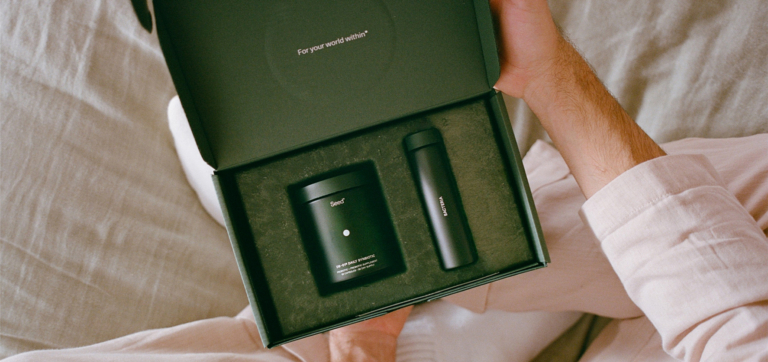
The first month arrives in a Welcome Kit with a refillable glass jar and a glass travel vial; refills come in a bio-based, compostable pouch, cutting single-use plastic.
DS-01® is the subject of ongoing clinical research, including a trial under an FDA Investigational New Drug (IND) authorization in people with occasional digestive challenges. Every batch is third-party tested for AFU, purity, and survivability.
Florastor is one of the best-known probiotics on the market, built around a single, hardy yeast strain with a long history of use.
Florastor’s only active ingredient is Saccharomyces boulardii CNCM I-745 — a yeast, not a bacterium. Most probiotics are bacteria, but some beneficial yeasts also meet the scientific definition.
This strain is among the most-studied microbes for antibiotic-associated and acute infectious diarrhea.10 Because it’s a yeast, it’s naturally resistant to stomach acid and to antibiotics, and it works through several mechanisms — interacting with gut microbes, affecting microbial toxins, and modulating immune signaling.11
Florastor is a standalone probiotic with no prebiotic or postbiotic. Its inactive ingredients include lactose and magnesium stearate; the lactose is a small amount, but worth noting if you have severe lactose intolerance.
Florastor uses a standard vegetarian capsule. (Seed’s capsule is vegan, for comparison!) The company says the yeast is naturally hardy enough to survive the stomach and reach the intestines without special delivery technology.
S. boulardii has a substantial research base, especially for managing occasional diarrhea, though some results are mixed. Because it’s a live yeast, there are safety considerations for severely immunocompromised people and those with central venous catheters, due to rare cases of fungemia (a bloodstream yeast infection) — a reason to check with a doctor first.12
There’s no “right” choice; everyone responds to supplements differently. The decision comes down to your goal.
Both are rooted in science; they just apply it differently. DS-01® is a foundational, everyday synbiotic for systemic gut health, while Florastor is a targeted tool for specific, temporary digestive disruptions.
🌱 Good gut decisions aren’t made on guesswork — they’re cultured with care.
For proactive, daily, whole-body support, Seed’s DS-01® takes the broader approach. Its 24 bacterial strains and prebiotic support multiple body systems. Florastor is also safe for daily use but is more often used for targeted support, such as during or after a course of antibiotics.
Most probiotics are bacteria; a few are yeasts. The Lactobacillus and Bifidobacterium strains in DS-01® are bacteria that naturally live in the human gut. Saccharomyces boulardii in Florastor is a probiotic yeast — less common, but effective, and notably not affected by antibiotics, which is why it’s popular to take alongside them.
It’s generally considered safe, with no known contraindications. They serve different functions, so it’s worth asking a healthcare provider whether you need both — for example, DS-01® for daily support and Florastor during a course of antibiotics. Probiotics are also transient (they don’t build up in your system over time), so more isn’t automatically better.
Because DS-01® includes both probiotics and a prebiotic. Its pomegranate-derived polyphenols feed and support the microbes, which is what makes it a synbiotic. Florastor is a standalone probiotic — just its live yeast strain, with no prebiotic.

Overview The probiotic aisle can be a lot — bold branding, “super strain” claims, and more “biotics” than anyone can keep straight. If you’ve narrowed it down to Seed’s DS-01® and Ritual Synbiotic+, here’s a straight side-by-side with the science behind each. 🦠 Both are synbiotics built to support your gut microbiome, but they take...
Overview Gut health is having a moment, and the shelves show it — rows of “biotic” blends all promising a calmer, healthier gut. Two you’ll run into often are Seed’s DS-01® Daily Synbiotic and Klora Gut-Renew. Both say they support your gut, but they’re closer to apples and oranges: one is built around live probiotic...
Overview Welcome to the comparison you didn’t know you needed—but your gut definitely does. You’ve probably seen countless options lining the shelves (or filling your social feeds), and two names that keep coming up are Seed’s DS-01® Daily Synbiotic and Visbiome. Both have scientific street cred, but here’s the thing: they’re playing completely different games....