Next Article
Microbiome Testing 101 (Finally, a Reason to Mail Your Poop)
5 minutes
Coral reefs are under threat, but their resident bacteria could provide a protective shield. Project ReefLink is studying microbes from coral aquariums to help save reefs before it's too late.
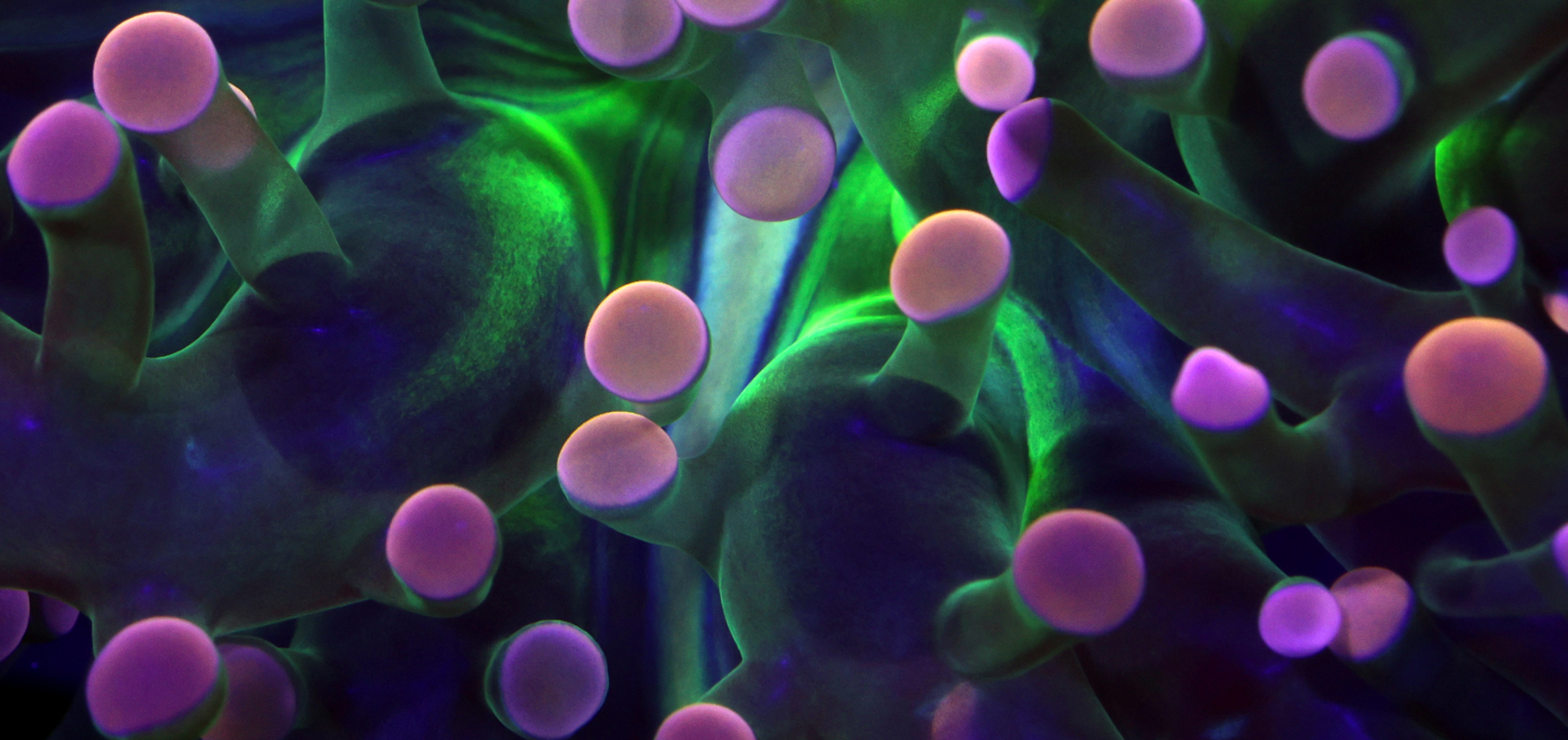
Image: Coral Morphologic
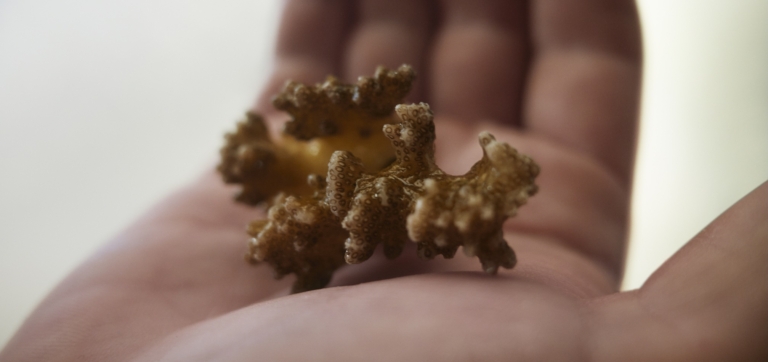
Coral is many things at once: An animal, a habitat, and an invaluable protector of ocean health.
Individually, coral polyps are small, tube-shaped organisms of the phylum Cnidaria (closely related to sea anemones and jellyfish). Certain corals, such as stony reef-building corals, cover themselves in a sturdy calcium carbonate shell to protect their soft bodies as they grow. Together, these corals converge to form a colorful underwater world.
While coral reefs cover less than 0.1% of the ocean floor, around 25% of marine species rely on them for food, habitat, and other forms of protection.1 Sometimes referred to as “rainforests of the sea,” biodiverse and productive reef habitats provide $9.9 trillion in ecosystem services annually.2,3
The benefits that humans derive from naturally occurring systems.
Reefs are dynamic, and delicate. Living coral populations have declined by over 50% since the 1950s, due in part to increasing ocean warming and acidification driven by anthropogenic (human-caused) greenhouse gas emissions.4
Like the human microbiome, the microorganisms that live in and on coral are essential to their health and resilience. At the laboratory of SeedLabs‘ partner The Two Frontiers Project (2FP), researchers are studying how coral’s future—and its ability to survive in a warming world—may come down to its microbiology.
If you were to pop a reef-building coral under a microscope, you’d see one of the most abundant and diverse microbiomes ever studied.2 Millions of bacteria, fungi, viruses, and algae of all kinds live throughout the internal coral polyp and its external skeleton.
Coral cannot live without these beneficial microorganisms. Some act as a first line of defense against invaders and protect coral (which does not have an adaptive immune system of its own) from pathogens and diseases. Others help break down compounds from surrounding waters into usable materials.5 The photosynthetic algae that line the cells of coral, called zooxanthellae (zo-xan-thel-la), are especially essential, converting sunlight into the oxygen and glucose necessary for survival.6 These algae also give corals their vibrant colors.
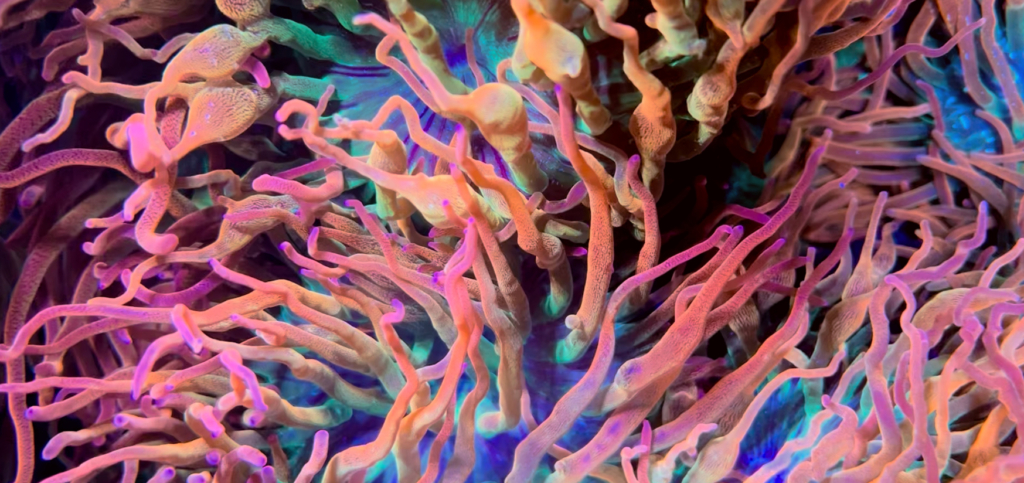
A coral and its microorganisms—collectively known as the coral holobiont—are sensitive to environmental changes. If surrounding ocean temperatures rise, the symbiosis (mutually beneficial relationship) between coral and microalgae can break down, creating competition.2 If stressors persist over time, coral can eventually expel its color-lending zooxanthellae altogether.
This process is known as coral bleaching. You may be familiar with the image of corals turning white and weakened. But bleaching is more than a visual change—it reflects a breakdown in the relationships that help corals survive. When microbial communities are disrupted, they can shift toward disease-prone states, reducing corals’ resistance to pathogens and leaving them more vulnerable to disease. Under prolonged stress, reef communities may reach a tipping point where they can no longer recover. As corals lose their ability to sustain life, the reef could begin to die off.
EXPLORE FURTHER: Why Are Coral Reefs Dying?
The relationship between coral and its resident microbes has never been more at risk. Reefs around the world are currently experiencing the fourth period of mass bleaching in just three decades.7 If current warming trends continue, 70-90% of existing coral reefs could be gone by 2050—with some predicting reefs could disappear entirely by 2070.2,8
It doesn’t have to be this way. “Microbiome engineering” has emerged as a powerful tool for mitigating coral loss in our lifetimes.2 Scientists—like those at 2FP—are searching for microorganisms that can be applied to coral to make them more resistant to future threats.
Microbiome-focused coral research has enormous potential. “Ultimately, we aim to shift the odds in favor of coral survival in a rapidly changing ocean,” says Krista Ryon, the Director of Operations at The Two Frontiers Project.
Project ReefLink is a community science initiative that brings aquarists and scientists together to explore coral microbes and develop methods to support coral health, resilience, and resistance to disease.
Aquarium corals are more than just beautiful—they’re reservoirs of microbial diversity. They share the same fundamental biology as corals in the wild, including symbiotic relationships with algae and microbes, but they are better suited for detailed research. They can be accessed more easily than remote reef sites, allowing for high-resolution observation and experimentation in a controlled environment.
Ultimately, we aim to shift the odds in favor of coral survival in a rapidly changing ocean.
Krista Ryon
For this initiative, which launched in the fall of 2025, hobby aquarists from across the country were called on to submit information about the coral in their reefs on CitSci.org. Scientists at 2FP then identified a select number of reefs with high scientific value and requested samples of their water and coral. Public aquariums, zoos, and reef clubs across the country also sent in samples.
The 2FP team is now processing this diverse sample collection in search of common microbial patterns, signatures of imbalance, or taxa that may support resilience.
“Our hope is to uncover microbial strategies that help corals resist disease and adapt to environmental stress, and to translate that knowledge into deployable tools,” says Ryon. For example, if the team identifies a common bacterium that helps corals resist disease, that bacterium could one day be applied to coral fragments during restoration efforts – a “coral probiotic” of sorts.
The Two Frontiers Project hopes that opening this study to non-scientists raises public awareness of coral conservation and helps people feel more personally connected to this work. “Our goal is also to build a community of citizen scientists where participants contribute not just samples, but also personal experience, photos, and connections that strengthen the coral keeper community,” says Ryon.
In this case, crowdsourcing may lead to stronger results. By the time of publication later this year, Ryon and the 2FP team hope to have a “mosaic of microbial environments” from reefs across the country. More than 100 samples have already arrived at the laboratory, providing insight into how corals may respond to a wide range of stressors. Much like a reef itself, the project’s individual contributions are stronger together.
Coral reefs are under threat, but their own resident bacteria could provide a protective shield. By studying the microbial life in fish tanks and aquariums, The Two Frontiers Project seeks to identify and activate this internal armor.
Stay tuned for more updates on this project, its early findings, and its results. And if you have any reefkeepers in your life, please do share it with them, too. “Saving coral reefs will require everyone working together, and this project is one way people can be part of the solution,” says Ryon.
ReefLink is the third community science project led by 2FP and SeedLabs. Learn more about our last two projects (which have collected 1,100 data points from 115+ community scientists and counting) here.
Read Fast Company’s coverage of Project ReefLink here.


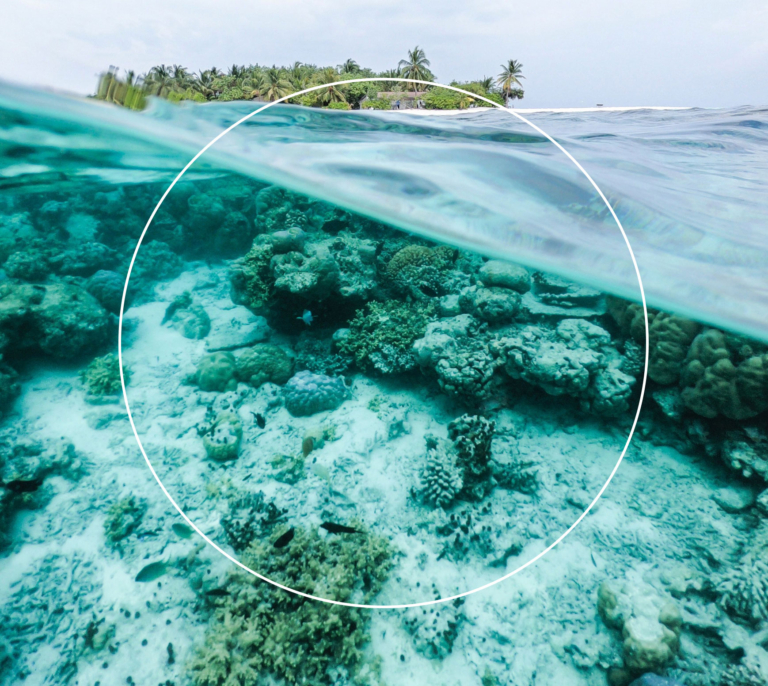
Corals are integral to the health of the entire ocean ecosystem and beyond. But a host of threats have put coral reefs at risk of worldwide collapse within the next decade. Coral probiotics are being explored to restore our planet’s reefs.
One hundred miles southwest of Tokyo, a volcanic island rises from the depths of the Philippine Sea.
Methane is up to 86 times more powerful than CO2 in the short term. Could bacteria help us mitigate the super pollutant?