Next Article
Can Probiotics Help With Strep Throat?
6 minutes
Can probiotics help with urinary tract infections? Here, we explore the science behind this question: causes of most UTIs and how they develop, the biology of vaginal microbiomes and how L. crispatus defends it, and how probiotics for women may play a role in preventative care.
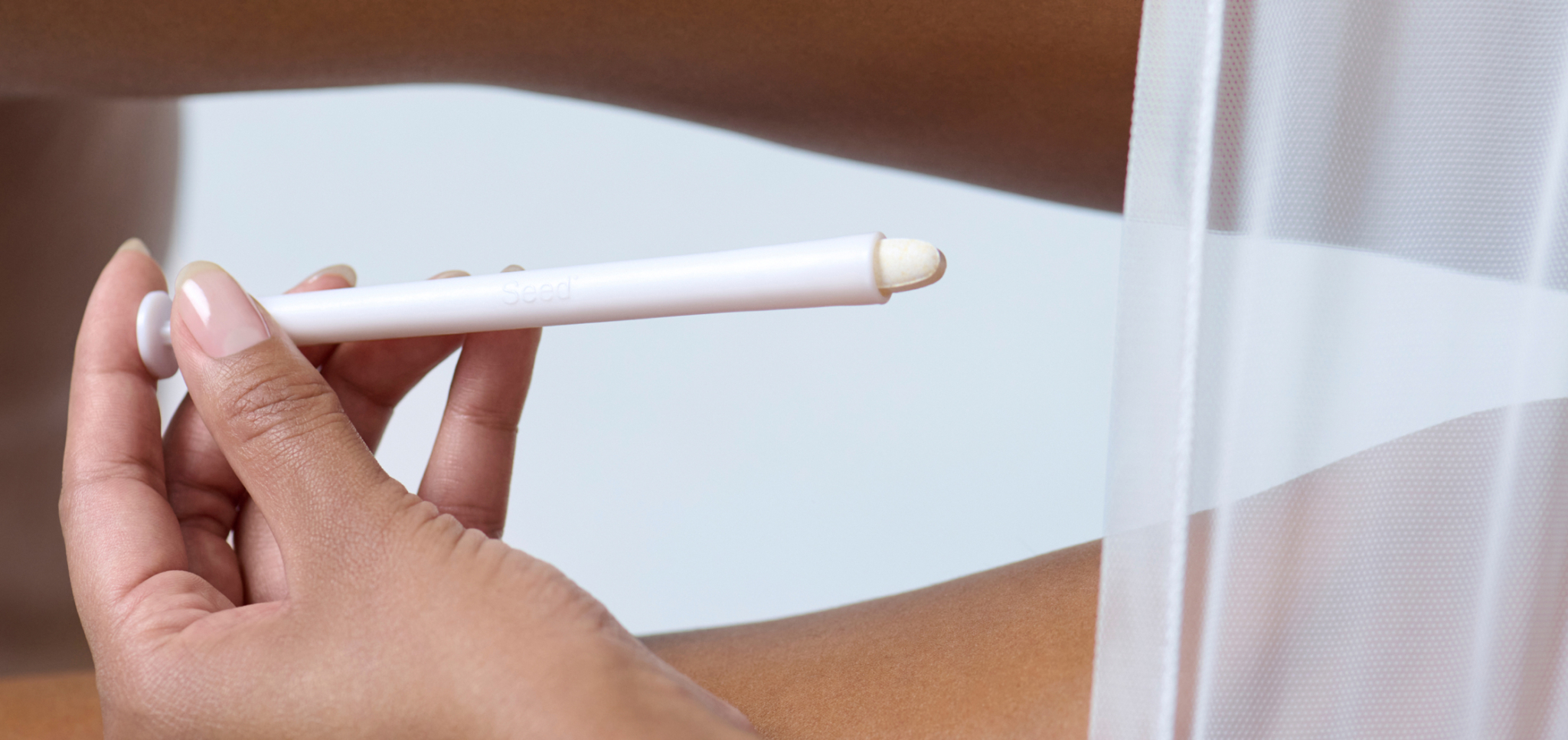
If you’ve ever dealt with a urinary tract infection (UTI), you likely know the signs. The telltale burn and aches, frequent bathroom trips, and a pharmacy visit for another antibiotic prescription. And if you’re experiencing chronic UTIs, you’re among many who have wondered: Is there any way to break the cycle?
That’s where probiotics come in. Maybe you’ve seen claims online that a probiotic can stop UTIs in their tracks. 🛑 Sounds appealing, but let’s not get carried away with what they’re capable of. Keep this in mind as we dig into the subject: While there’s scientific promise for certain strains as a proactive, preventive step for UTIs, it should not be declared a treatment.
Probiotics can support the ecosystem that keeps uropathogens (UTI-causing bacteria) at bay. But they aren’t a replacement for antibiotics during active infections. If you’re looking for information on UTI’s, healthy microbiomes, and the latest research, you’ve come to the right place.
You might think of a UTI as a bladder problem, but the root often lies in your vaginal microbiome or VMB. This is your microbial security squad—a healthy, Lactobacillus-dominated ecosystem producing lactic acid to keep things just acidic enough to stop troublemakers like E. coli from setting up shop.1 And lactic acid is just one tool in the kit: these Lactobacillus also make hydrogen peroxide, compete with uropathogens for space on your cells, and release their own antimicrobial compounds.2
The main troublemaker, uropathogenic E. coli (UPEC), often lives harmlessly near the vagina and rectum. When defenses weaken, it can travel up the urethra and latch onto bladder cells using tiny hook-like structures—kicking off an infection.3
But life happens: antibiotics, certain clothing, sex, and even hormone shifts can knock this balance off-kilter. (Isn’t it so much fun being a woman? 😅) When protective Lactobacillus levels drop, vaginal pH can rise, making things easier for uropathogens to move in and start the climb toward your bladder. That’s often the spark that leads to a UTI.1
And if you’re past menopause, this connection becomes even more relevant. (Yes, your vaginal microbiome changes throughout your life!) As estrogen declines, the vaginal walls thin and produce less glycogen—the fuel your protective Lactobacillus rely on. Fewer Lactobacillus can mean a higher vaginal pH and, for many women, more frequent UTIs. It’s a natural part of aging, not a personal failing, and keeping those Lactobacillus levels up is an active area of research.4
👉 TL;DR: If a vaginal microbiome is in good shape, the urinary tract has a stronger defense system. It’s kind of like having a bouncer at the door (but way more science-y and less likely to check your ID).
This is where the science gets more nuanced—and complicated. The connection between Lactobacillus and urinary tract health is strong enough that researchers have looked at whether supplementing could help prevent UTIs.
A lot of it comes down to antibiotic resistance. 💊
E. coli, the bacteria behind most UTIs, is growing more resistant to several common antibiotics—and repeated courses for recurrent infections only make that worse over time.5 That’s exactly why researchers are digging into non-antibiotic, preventive strategies like probiotics: to complement (never replace) antibiotics when they’re truly needed.
A recent trial followed 174 premenopausal women with histories of recurrent UTIs and found that both oral and vaginal probiotics (with specific Lactobacillus strains) led to fewer symptomatic UTI episodes over four months.6 Another study looked at vaginal Lactobacillus crispatus CTV-05 suppositories and found that women who used them after a UTI had fewer recurrences than those given a placebo.7
Prevention research is active here, too. One often-cited example is a 2012 prevention trial in 252 postmenopausal women with recurrent UTIs, which compared a probiotic (L. rhamnosus GR-1 and L. reuteri RC-14) against a common preventive antibiotic over 1 year.
The probiotic was somewhat less effective at preventing recurrences—but, notably, it didn’t drive antibiotic resistance, while resistance among E. coli climbed sharply in the antibiotic group.8 It’s one trial in one population, so it’s not the final word. But it does help explain why prevention research is growing.
📖 Read about how probiotics could support you during menopause.
Science is complicated. Case in point: When researchers pool data from multiple studies, the results can look disappointing. One major review found that, overall, probiotics didn’t clearly reduce UTI recurrence.9 Why? Because not all probiotics are created equal. Lumping different strains, doses, and delivery methods together dilutes the data.
However, when isolating specific comparative trials, the outlook changes. A 2024 analysis of 50 randomized trials showed that certain probiotics do successfully lower UTI risk compared to a placebo. This same study found that D-mannose actually showed the strongest preventive effect.10
If probiotics might help prevent UTIs, does it matter how you take them? Is swallowing a capsule enough, or should you look for a vaginal suppository?
👉 Learn more about probiotics for women.
Oral probiotics (taken by mouth) are thought to support the gut-vagina axis—meaning a healthier gut microbiome can, over time, contribute to a more resilient vaginal ecosystem. There’s no direct pipeline from your gut to your vagina, though, so the effect is indirect: a healthier gut may support vaginal defenses by way of your immune system, rather than microbes migrating over.
Vaginal probiotics are suppositories that are made to deliver the beneficial microbes (probiotics) directly to where they’re needed (the vagina). This helps to support protective Lactobacillus communities at the source.
A research trial found that vaginal probiotics led to a lower rate of recurrent UTIs compared to oral-only probiotics and placebo.6 That means for some, a targeted approach may be best, but there’s no universal answer yet, because microbiomes are unique.
Of all the probiotic strains studied for urogenital health, Lactobacillus crispatus has the most evidence behind it.1,11 It produces lactic acid and adheres to the vaginal lining, making it a key player in that ecosystem.
Other Lactobacillus strains studied for urogenital support include L. rhamnosus, L. reuteri, and L. gasseri. Two of the most-studied are L. rhamnosus GR-1 and L. reuteri RC-14—and those letters and numbers aren’t there for decoration.
Dirk Gevers, Ph.D., explains, “Details matter immensely. Simply having Lactobacillus or Bifidobacterium in a product doesn’t tell you what it does. The specific strain designation—the letters and numbers that follow the species name—is what links a microbe to its researched benefits. Without that strain-level specificity, claims about efficacy lack a scientific foundation.”
💡 Pro Tip: When shopping, prioritize formulas with clearly listed, clinically studied strains. More is not always better—strain specificity is the name of the game.
A few must-knows before you pop that first capsule:
UTI prevention is about reinforcing the defenses already present in your body. In addition to high-quality probiotics, here are other habits and tips to apply to your routine:
Should you take probiotics for UTIs and urogenital health? Here’s where the science stands: Probiotics (especially certain Lactobacillus strains) may play a role in keeping microbial defenses strong in the urinary tract. However, they’re not a replacement for medical treatment. The real-world benefit comes from choosing the right probiotic strain, in the right dose, for the right reason—and remembering it’s supportive, not curative. ☝️
While you can’t “probiotic” your way out of active infections, you can support the microscopic ecosystems involved, which can help to lower your risk over time.
Remember, probiotics don’t treat UTIs directly. Instead, they work by supporting and fortifying your body’s microbial environment in more subtle ways, which takes time. Research on probiotics for prevention of UTI occurrence showed varying follow-up lengths, from weeks to a year.9
For most healthy individuals, probiotics are considered safe and are unlikely to make a UTI worse. However, if you’re immunocompromised or have serious underlying health conditions, speak with your doctor before starting probiotics. An active UTI requires medical treatment, and probiotics should not be used as a substitute for it.
There is no single “best” probiotic for everyone. Research points to strains from the Lactobacillus genus, especially L. crispatus, as important for a healthy vaginal microbiome, which plays a role in urinary tract and bladder health. Look for products that list specific, clinically studied strains rather than generic species.1,11
Somewhat. After menopause, lower estrogen tends to reduce protective Lactobacillus and raise vaginal pH, which could lead to recurrent UTIs. Some researchers have looked specifically at UTI prevention for postmenopausal women—including a 2012 trial using L. rhamnosus GR-1 and L. reuteri RC-14.8
Because individual needs vary, among other factors (e.g., vaginal estrogen therapy), it’s worth talking options through with your healthcare provider.
Possibly. The antibiotics that clear UTIs can also deplete the protective Lactobacillus in vaginal microbiomes—the bacteria that keep uropathogens like E. coli from taking hold. Losing them is part of why UTIs recur, so probiotics may help rebuild that population. Ask your doctor or pharmacist about the best timing for your antibiotic.



Overview So, you’re pregnant! (Congratulations 🎉) If you’re like most parents-to-be, you’re swimming in advice—from the earnest advice you got from your OB-GYN to the well-meaning but slightly wild that comes from your relatives and 2 a.m. Google deep-dives. When every choice feels monumental, even something like “probiotics for pregnant women” can sound like a...

Antibiotics can leave your gut feeling off balance. Find out which probiotic strains may help support your microbiome, how to time them for maximum benefit, and why fiber is your gut's best friend during recovery.

There’s a wealth of information that can be found on the label of a probiotic. You may be used to seeing MILLIONS and BILLIONS plastered all over, but what do these numbers mean? And how are they measured?