Next Article
Soil-Based Probiotics: What the Research Actually Shows About Spore-Forming Strains
7 minutes
Gut microbiome tests promise personalized health insights, but the science tells a more complicated story. Here's what current research says about testing your gut health—from at-home kits to clinical diagnostics—and what actually helps.

Your gut holds trillions of microbes, and right now no consumer test can tell you whether that community is healthy. Not because the science isn’t real (it is, and it’s moving quickly), but because researchers still haven’t agreed on what a healthy microbiome looks like.
That gap matters if you’re dealing with bloating, irregular digestion, or plain curiosity about what’s going on in there. Mail-in kits promise a report full of scores, graphs, and personal recommendations. What you actually get is a partial look at one part of your gut, scored against a standard that doesn’t exist yet. 😬
So the better question about how to test gut health is a practical one: which tests actually work, which ones your doctor would order, and what helps even if you never test at all? All three have reasonably clear answers, starting with what those mail-in kits are measuring.
Most direct-to-consumer (DTC) gut microbiome tests work the same way. You collect a small stool sample at home, mail it to a lab, and get a report a few weeks later. The lab uses DNA sequencing to identify which bacteria are present and in what relative amounts. Some companies go further with gut health scores, diversity ratings, or personalized dietary recommendations.
The trouble starts between the sequencing and the interpretation. A 2026 analytical evaluation ran identical standardized samples through multiple DTC providers and found that results varied dramatically. The inconsistencies were large enough that one sample sent to two companies could look as different as samples from two unrelated people.1
That’s not a rounding error. It means the personalized recommendations you get back may say more about which company you picked than about what’s living in your gut.
There’s still no agreed-upon definition of what a healthy gut microbiome looks like.2 Composition varies widely between individuals, and similar microbial profiles can be associated with different health outcomes.3 Researchers have raised concerns that the “balance” scores reported by DTC microbiome tests don’t have an established clinical meaning—so a higher or lower score may not reliably tell you whether your microbiome is healthy or unhealthy.
🔬 Science Translation: Sequencing tells you which bacteria showed up, not what they were doing. You can think of it like a guest list for a party: you know who walked in, but nothing about what happened once they got there.
Set the DTC reliability problems aside and a deeper limitation remains: your stool doesn’t fully represent your gut.
A large share of the bacteria living deeper in the colon never show up in a stool sample. Many of the metabolites those bacteria produce (compounds with active roles in your health) are missed entirely.4
Clinicians can sample from inside the colon or from the gut lining itself, which gives a fuller picture. But research comparing stool, colonic fluid, and mucosal tissue from the same patients found each method captures a different microbial profile.5 None of them tells the whole story alone.
Dirk Gevers, Ph.D., Chief Scientific Officer at Seed Health, frames the limitation in terms of what these tests are built to see. “The gut microbiome is dynamic and distributed across different regions, so a single stool sample is more like a snapshot from one window of a much larger building. Composition can tell us something, but it doesn’t necessarily tell us what those microbes are functionally doing. That functional layer is critical, and it’s something a single consumer stool test still has limited ability to capture.”
Clinician-ordered microbiome testing lands in a similar place: useful as a complement to standard diagnostics, not as a standalone tool. It may add supporting information for conditions like inflammatory bowel disease and certain metabolic conditions.3,6 For general wellness, the expert consensus is that we’re not there yet.
When a provider suspects a gut problem, they reach for tools validated for specific diagnostic questions.7
Each of these answers a specific question with a validated method. A DTC microbiome test gives you a compositional overview with no clinical framework for interpreting it.
Microbiome science isn’t useless here, far from it. The Gut Microbiome Wellness Index 2, developed by Mayo Clinic researchers, can differentiate healthy individuals from those with disease at roughly 80% accuracy.10 But that’s a research instrument, not something you can order online. The distance between what’s scientifically possible and what’s commercially available is still wide.
👉 TL;DR: If you have a specific question (infection, inflammation, SIBO, structural damage), your doctor has a validated test for it. If you want a general gut health score, nobody has a validated test for that yet.
The actions with the strongest evidence behind them don’t require any test results at all.
Gut microbiome testing has the technology. What it doesn’t have yet is the instruction manual. Each problem looks fixable on its own: companies could standardize their sequencing, samples could be taken from deeper in the colon. But fix all of them and you’d still be stuck. A flawless test would tell you which microbes are there, not what they’re doing, and there’s no agreed-upon healthy result to compare yours against.
That’s not a reason to feel stuck. It’s a reason to stop waiting. The habits with the best evidence behind them (a diverse, fiber-rich diet, honest attention to your own symptoms, and for some, probiotics with real clinical data) don’t need a test result to start working. What they need is repetition.
🌱 You don’t need a readout to begin: the gut you want is grown, not diagnosed.
Through your healthcare provider. Doctors can order targeted stool tests for specific pathogens or inflammation markers, breath tests for conditions like SIBO, and blood work for biomarkers linked to gut dysfunction. For structural questions, they may recommend endoscopy or colonoscopy. At-home microbiome kits are widely sold, but an international expert panel currently advises against routine microbiome testing because results lack the reliability and clinical context needed for meaningful guidance.3 If digestive symptoms are persistent, starting with your doctor is the most productive first step.
Persistent bloating, excessive gas, irregular bowel movements, and abdominal discomfort after eating. Irregularity can mean constipation, diarrhea, or unpredictable alternation between the two. Some research suggests microbiome disruptions may also connect to fatigue, skin issues, and mood changes, though those links are still being studied.11 The gut microbiome is highly individual, so no single checklist applies to everyone. If symptoms are frequent enough to disrupt your daily life, that’s a signal to talk to a provider rather than to buy a test.
With a mail-in stool kit, though the results are unreliable. You collect a sample, send it to a lab for DNA sequencing, and receive a report listing detected bacteria, diversity scores, and sometimes dietary suggestions. A 2026 study found the same sample sent to different companies produced wildly inconsistent results.1 Tracking your own symptoms (bowel frequency, bloating patterns, energy levels, food reactions) tends to give more practical real-time insight. Pairing that with a diverse, plant-rich diet and clinically studied probiotics is a more evidence-based approach than a single test result.



Strategies for supporting digestive health beyond diet—from regulating your sleep timing to exploring your local park.
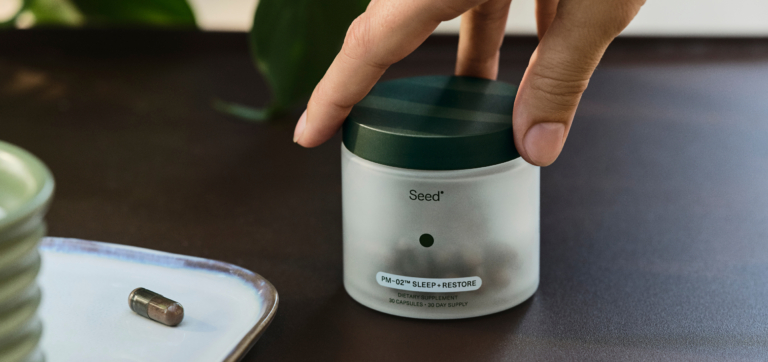
Melatonin doses have crept up—way up. What started as a 1mg tablet has ballooned into 5, 10, sometimes 20mg gummies promising to “knock you out”—and somehow, millions of people are still waking up groggy and unrested. That disconnect points to something most roundups about the best supplements for sleep won’t mention: the problem usually isn’t...

Your gut microbiome is the winter ally you never knew you needed. Here’s how it can brighten your mood through the dark days to come.