Next Article
6 Signs Your Probiotics Are Actually Working
5 minutes
What’s the best time to take probiotics? No study in people shows morning beats night, so take yours when you’ll remember. For a standard probiotic, a meal is a reasonable default—follow your label. Either way, consistency matters more than the clock.
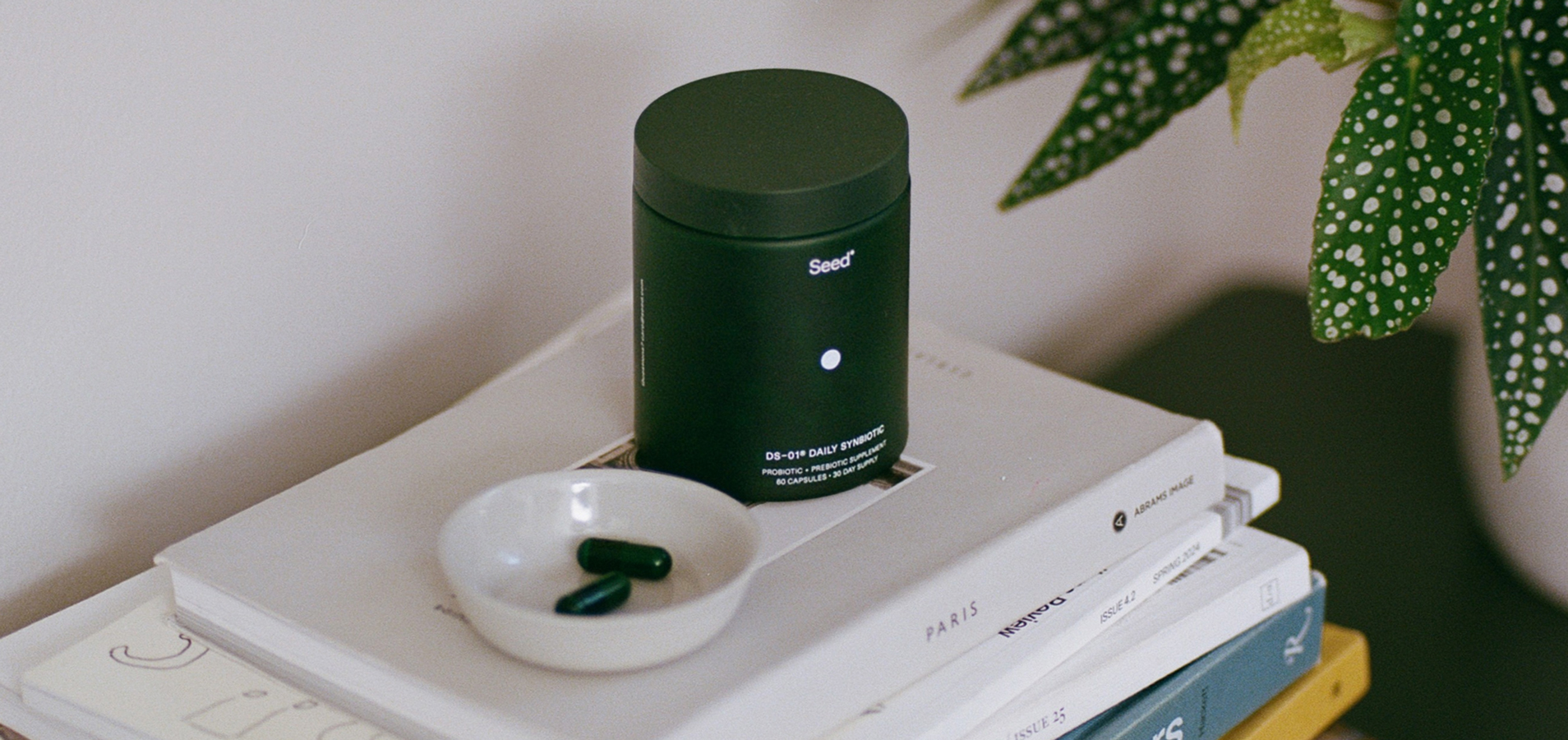
More people are adding probiotics to their daily wellness routine. If you’re one of them, you’ve probably wondered whether the clock matters. (Night owls, this one’s for you. 🦉) No study in people shows that morning or night matters, so take your probiotic when you’ll stick with it. For a standard probiotic, a meal is a reasonable default, based on lab studies of digestion. Follow your label, and remember: what matters most is consistency.
The best time is the one you’ll remember, since no one has compared morning and evening doses in people. Food may matter more. In lab studies, a meal helped standard probiotics survive stomach acid, so taking yours with a meal is a good default. Check your label, too. Whatever you choose, consistency matters most. ⌚
Quick answers to common timing questions:
| If you’re wondering about… | What the evidence suggests |
|---|---|
| Taking it in the morning | That’s fine. No study in people shows morning beats night. Pair it with a habit you already have, like breakfast. |
| Taking it at night | Also fine, if that’s the time you’ll remember. It’s a matter of convenience, not a proven benefit. |
| Taking it on an empty stomach | For a standard probiotic, lab models found food improved survival compared with an empty stomach. Capsules designed to resist acid may be less affected, so follow your label. |
| Taking it before or after eating | With a meal, or shortly before one, is the simplest default. Lab results on taking it after a meal are mixed. |
| Taking it with coffee | No study has tested a capsule swallowed with hot coffee. Heat lowered live counts in lab work, so water or a cool drink is a simple choice. |
| Taking it with antibiotics | There’s no proven spacing rule. Ask a healthcare provider about timing. |
As Dr. Zain Kassam, MD, MPH, emphasizes, “Consistency is key; timing is not. … Support them by eating a nutritious diet that includes fiber.”
Some people take their probiotic first thing in the morning. Others choose bedtime. Both are fine: no study in people has compared the two, so neither has been shown to work better. Pick the time you’re most likely to remember, and pair it with something you already do every day.
Your gut and brain stay in touch through the “gut-brain axis,” and research has linked gut bacteria with sleep.1 Probiotic trials have also looked at sleep quality.2 But no study shows that the time you take a probiotic matters. A gut-sleep link ≠ a reason to take your probiotic at bedtime.
Your gut houses trillions of bacteria, fungi, and viruses—your gut microbiome—that influence your health every single day. As defined in a 2019 review, probiotics are specific strains of live microbes that may help support your body’s natural functions.3
For everyday digestive support and immune balance, probiotics may be a meaningful addition to your daily routine. Multiple clinical trials and scientific reviews have characterized the benefits of taking probiotics, and scientists continue to uncover new ways they support our well-being.
Probiotics support our health directly and by stimulating the production of other helpful compounds in our body. They start with gut health, but their benefits may extend throughout your entire system.
Probiotics are tiny but powerful allies for your digestive health. These beneficial bacteria may help maintain regular bowel movements and ease bloating.4
Certain strains may also support your gut barrier.5 Think of this barrier as a smart gateway: it blocks harmful substances from entering your gut, while letting beneficial nutrients pass through. But these “good bacteria” can do even more. They indirectly contribute to whole-body benefits.
At the strain level, some probiotic formulations include strains that may support folate synthesis in the gut microbiome — folate is a B vitamin involved in everyday cellular processes throughout the body.6
These effects may explain why so many people add probiotics to their daily routine. If you plan to take them, you may wonder whether food makes a difference.
You may have heard that probiotics work best first thing in the morning on an empty stomach. But lab research on standard probiotics points the other way.
In 2011, researchers tested one probiotic capsule containing four microbes in a lab model of the human upper gut.7 Timing changed how many microbes survived:
The test meal was oatmeal with milk, and milk-based options did better than apple juice or water. Food helps buffer stomach acid, and the meal’s fat seemed to matter more than its protein. One probiotic yeast, Saccharomyces boulardii, wasn’t affected by meal timing at all. The researchers’ advice was for probiotics without an acid-resistant coating.
Newer lab models point the same way. In 2025, researchers found that food helped a probiotic strain survive better than an empty stomach, whether it was given with or after the meal.8 In a 2021 lab model, probiotics did better with meals than with drinks alone, coffee included.9 Results for taking a probiotic after a meal differ between models.
No study in people has compared morning with evening doses. In one small study, 20 healthy adults took a two-strain probiotic for a month, either before or after breakfast.10 Stool levels of both strains rose in at least half of people either way. But the study didn’t compare an empty stomach with a meal or measure how people felt.
🔬 Science Translation: In lab models of digestion, a meal helped standard probiotics survive stomach acid. No study in people has shown that morning or night matters, so the right time is the one you’ll stick with.
Some capsules are designed to resist stomach acid, and lab models suggest they may be less affected by meals. Check your probiotic’s label.
DS-01® Daily Synbiotic is clinically validated in the largest clinical trial for a probiotic on bloating + gas in healthy men + women.°µ11 In that trial, DS-01® was clinically shown to reduce bloating + gas.°11 Its ViaCap® capsule-in-capsule design safeguards probiotics from stomach acid through digestion. DS-01® is engineered to reach the colon.*°12 You can take DS-01® Daily Synbiotic on an empty stomach or before/after a meal—whichever is most comfortable for you.
Not all probiotic strains respond the same to stomach acid. Some strains (like some Lactobacillus and Bifidobacterium species) are more sensitive to acidic environments, while others (like Bacillus-based strains) form protective spores that are naturally resistant. Capsule design may help protect more sensitive strains.
What you eat alongside your probiotic can play a part, too.
If you do like taking your probiotic with a meal, here’s a quick cheat sheet for what pairs well:
➕ Foods that may support probiotic viability:
A diet with fiber and fermented foods can sit alongside a daily probiotic. Some fermented foods contain live microbes, but most aren’t probiotics, because their microbes haven’t been defined and tested for a specific benefit.13,14
⚠️ What to watch out for:
Good news: ViaCap® safeguards probiotics from stomach acid through digestion — but these are still smart habits for any probiotic.
Think of your digestive system as an obstacle course that probiotics must make their way through to reach their destination.
This journey begins the moment you swallow your probiotics. Along the way, these beneficial bacteria face challenging environments until their protective coating dissolves, releasing them into your digestive tract.
The first and most formidable challenge is your stomach, a highly acidic environment with a pH level comparable to battery acid.16 Your stomach produces about 3-4 liters of this acid every day to help digest your food and fight against infections.
For probiotics to be effective, they must survive this daunting acid bath. This is why your probiotic’s delivery system matters—and, for a standard probiotic, so does a meal. Without proper protection, these beneficial bacteria face the same fate as a breakfast muffin and get broken down in the stomach.
Your intestines are where probiotics can make a meaningful difference. Nutrients are absorbed all along the way, and different sections play host to a variety of gut bacteria. When probiotics journey through your intestines, they interact with various cells, including those lining your digestive tract and immune cells.
These interactions are temporary. Probiotics are transient—they don’t establish permanent colonies in your gut, as many people believe. Think of them as friendly visitors rather than permanent residents.
As probiotics pass through your system, they:
“Probiotics work best when taken daily as they don’t typically have long-term colonization,” Dr. Zain Kassam explains. “The consistency allows regular interactions with the beneficial microbes and the digestive tract, and the cells that drive important health benefits”
When you start a new probiotic, there may be a temporary acclimation period. During this time, some people experience mild digestive shifts — like changes in stool patterns, mild bloating, or temporary gas. A 2010 review described probiotics as generally well tolerated, with bloating and gas the most common effects, so a brief adjustment period is no surprise.17 These effects are generally confined to the gastrointestinal system.
Think of it like adding new roommates to an already full apartment — there’s bound to be a period of adjustment as everyone settles in. These shifts can indicate that your microbiome is adjusting to the new beneficial bacteria being introduced. The adjustment period typically resolves within a few days to a couple of weeks. If digestive changes persist, check in with a healthcare provider.
Consistency is the whole game, and a daily probiotic is easier to keep up when it’s tied to your routine. A few practical tips:
The time of day hasn’t been shown to matter, though food may matter for a standard probiotic. What matters most is:
Focus on building sustainable habits rather than pursuing perfect timing. Consistency > the clock. Your gut will thank you for it. 🙏 Remember to always consult with your healthcare provider before starting any new probiotic routine, especially if you have underlying health conditions or are taking medications.
Yes, and you should! Probiotics are best taken daily or as advised by your healthcare provider. Manufacturers include instructions on their labels, so it’s important to read all the information before starting.
Yes. Dr. Zain Kassam says, “Taking probiotics at night is perfectly fine if that’s the timing that works best for your schedule. The key is maintaining consistency with your routine.”
With a meal is a good default. For a standard probiotic, lab studies suggest taking it with a meal or shortly before one helps it survive stomach acid. Some people prefer taking probiotics without food, but others feel better when they take them with meals.
It’s best to listen to your body. Also, please make sure you read the instructions on your brand’s product label.
Some do, but not all. Some probiotics require refrigeration while others are shelf-stable — always follow label instructions. Modern formulation technologies (e.g., specialized capsule systems, moisture-resistant packaging, etc.) have made many probiotics stable at room temperature, which can be more convenient for daily routines since you can store them on your counter or take them while traveling.
Yes, for most supplements. Most probiotics work fine alongside vitamins and supplements. Talk to your healthcare provider if you have specific medical concerns or questions about your probiotics or supplements.
Ask your healthcare provider about timing. There’s no proven spacing rule; ask a healthcare provider how to fit a probiotic around an antibiotic course. Our guide to the best probiotics for antibiotics covers which ones have been studied, when people started them and for how long.
If you have a compromised immune system, talk to your healthcare provider before you pair probiotics with your antibiotics.
° These statements have not been evaluated by the Food and Drug Administration. This product is not intended to diagnose, treat, cure or prevent any disease.
µ As of February 2026.
* Based on an in vitro study conducted in SHIME®.



Do professional athletes have different gut microbiomes than the rest of us? Can running help keep me regular? And why do HIIT workouts always send me to the bathroom? We’ll answer all of it and more in this deep dive into exercise and the gut.

There’s a wealth of information that can be found on the label of a probiotic. You may be used to seeing MILLIONS and BILLIONS plastered all over, but what do these numbers mean? And how are they measured?

Understanding the fascinating connection between your gut and immune system can help you support them both in the months ahead.