Next Article
5 Signs Your Probiotics Are Actually Working
5 minutes
Forget strict schedules—getting the most out of your probiotics depends more on consistency than timing. Discover how modern delivery systems help probiotics reach your gut—and how daily usage can enhance immunity, nutrient absorption, and overall wellness.
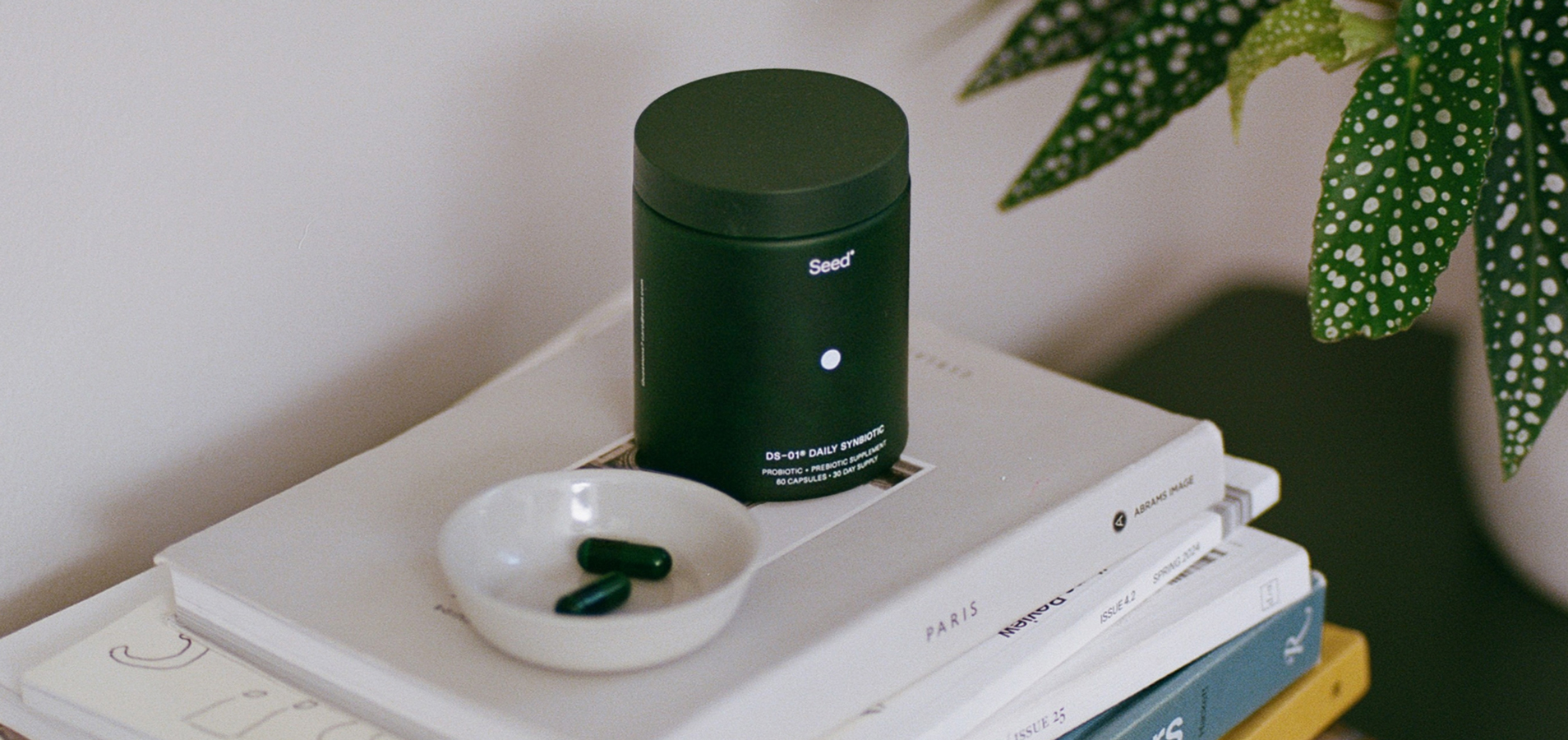
Across a growing body of clinical research, probiotic strains have been associated with improved digestion and immune balance. These live bacterial strains have become a part of many people’s daily wellness routines.
While the research continues to evolve, more people are adding probiotics to their daily wellness routine. And if you’re considering them too, here’s some good news: thanks to advances in probiotic technology, timing isn’t critical. So, the ‘best time to take probiotics’ doesn’t really exist. What matters most is consistency.
Learn about how probiotics work, their benefits, and why you can take them on your own schedule.
Your gut houses trillions of bacteria, fungi, and viruses that influence your health every single day. As defined in a 2019 review in Frontiers in Microbiology, probiotics are specific strains of live bacteria that, when added to this complex ecosystem, may help support your body’s natural functions.1
So, why should you care about these beneficial bacteria? For everyday digestive support and immune balance, probiotics may be a meaningful addition to your daily routine. Multiple clinical trials and scientific reviews have characterized the benefits of taking probiotics, and scientists continue to uncover new ways they support our well-being.
Probiotics support our health directly and by stimulating the production of other helpful compounds in our body. They start with gut health, but their benefits may extend throughout your entire system.
Probiotics are tiny but powerful allies for your digestive health. These beneficial bacteria may help maintain regular bowel movements and ease bloating.2
They also support your gut barrier.3 Think of this barrier as a smart gateway: it blocks harmful substances from entering your gut, while letting beneficial nutrients pass through. However, these “good bacteria” can do even more. They indirectly contribute to whole-body benefits.
At the strain level, formulations like DS-01® include strains that may support folate synthesis in the gut microbiome — folate is a B vitamin involved in everyday cellular processes throughout the body.4
These effects may explain why so many people add probiotics to their daily routine. If you plan to take them, you may wonder about the best time to do so. Here’s the latest.
When it comes to probiotics, here’s one thing you don’t need to worry about—timing. ⌚ What matters most is taking them regularly.
Some people take their probiotics before meals to give these beneficial bacteria a head start to the intestines. Others choose to take them at bedtime.
Don’t like the idea of taking probiotics in the morning or night? No problem. Dr. Zain Kassam, MD, MPH, emphasizes, “Consistency is key; timing is not. Take your probiotics with or without meals and in the morning, noon, or night—whatever feels right to you. Your probiotics will still work their magic as long as you take them consistently. Support them by eating a nutritious diet that includes fiber.“
If you’re a night owl, here’s a bonus: in a study analyzing gut microbiome diversity and sleep physiology in humans, researchers identified associations between microbiome composition and sleep markers.5
The gut and brain communicate through what scientists call the “gut-brain axis.” A systematic review and meta-analysis in the academic journal, Clocks & Sleep, has also examined how microbiota composition and probiotic supplementation may relate to sleep quality.6 Taking probiotics before bed means they travel through your digestive system during your body’s natural rest-and-repair period, when the GI tract is relatively inactive.
If you’ve heard the traditional advice to take probiotics on an empty stomach first thing in the morning, recent research tells a different story.
For years, the standard advice was to always take probiotics with food — and there’s science behind that. In an in vitro model of the human upper gastrointestinal tract, Tompkins and colleagues found that probiotics taken 30 minutes after a meal had lower survival rates than those taken just before or with a fat-containing meal.7 The reason? Early probiotics had no real protection against stomach acid, so food had to act as a buffer.
Modern encapsulation and delivery systems changed this equation. Thanks to advances in probiotic delivery technology, these live bacterial strains can now be safeguarded through digestion whether taken with or without food.8
Based on SHIME® in vitro testing, DS-01®’s ViaCap® delivery system safeguards probiotic strains through digestion in both fasted (no food) and fed (after food) states. When your probiotic is engineered with delivery technology designed to safeguard bacterial viability through digestion, the old rules about timing with meals become less relevant. What matters then is not when you take it, but that you take it — consistently.
Not all probiotic strains respond the same to stomach acid. Some strains (like some Lactobacillus and Bifidobacterium species) are more sensitive to acidic environments, while others (like Bacillus-based strains) form protective spores that are naturally resistant. A well-designed capsule can safeguard even the most sensitive strains. You shouldn’t need to worry about strain-level acid tolerance — that’s what good formulation science is for.
Now, you may wonder why probiotics need special protection on their journey to your gut. Let’s follow their path from capsule to colon to understand why delivery matters more than timing.
If you do like taking your probiotic with a meal, here’s a quick cheat sheet for what pairs well:
➕ Foods that may support probiotic viability:
⚠️ What to watch out for:
Good news: with SHIME®-tested delivery technology like ViaCap®, these precautions are less critical for properly engineered probiotics — but they’re still smart practices for general gut health.
Think of your digestive system as an obstacle course that probiotics must navigate to reach their destination.
This journey begins the moment you swallow your probiotics. Along the way, these beneficial bacteria face challenging environments until their protective coating dissolves, releasing them into your digestive tract.
The first and most formidable challenge is your stomach, a highly acidic environment with a pH level comparable to battery acid.9 Your stomach produces about 3-4 liters of this acid every day to help digest your food and fight against infections.
For probiotics to be effective, they must survive this daunting acid bath. This is why the delivery system of your probiotic matters. Without proper protection, these beneficial bacteria face the same fate as a breakfast muffin and get broken down in the stomach.
Your intestines are where probiotics can make a meaningful difference. Nutrients are absorbed all along the way, and different sections play host to a variety of gut bacteria. When probiotics journey through your intestines, they interact with various cells, including those lining your digestive tract and immune cells.
Here’s something that might surprise you: these interactions are temporary—probiotics don’t establish permanent colonies in your gut, as many people believe. Think of them as friendly visitors rather than permanent residents.
As probiotics pass through your system, they:
“Probiotics work best when taken daily as they don’t typically have long-term colonization,” Dr. Zain Kassam explains. “The consistency allows regular interactions with the beneficial microbes and the digestive tract, and the cells that drive important health benefits”
When you start a new probiotic, there may be a temporary acclimation period. During this time, some people experience mild digestive shifts — like changes in stool patterns, mild bloating, or temporary gas. A scientific review in Cells describes how probiotics interact with the gut immune system, helping explain why a brief adjustment period can occur.10 These effects are generally confined to the gastrointestinal system.
Think of it like adding new roommates to an already full apartment — there’s bound to be a period of adjustment as everyone settles in. The good news? These shifts can indicate that your microbiome is adjusting to the new beneficial bacteria being introduced. The adjustment period typically resolves within a few days to a couple of weeks.
Consistency is the whole game — but how do you actually build the habit? A few practical tips:
While timing can play a role in probiotic effectiveness, what matters most is:
Focus on building sustainable habits rather than pursuing perfect timing. Your gut will thank you for it. 🙏 Remember to always consult with your healthcare provider before starting any new probiotic routine, especially if you have underlying health conditions or are taking medications.
Yes, and you should! Probiotics are best taken daily or as advised by your healthcare provider. Manufacturers include instructions on their labels, so it’s important to read all the information before starting.
Yes. Dr. Zain Kassam says, “Taking probiotics at night is perfectly fine if that’s the timing that works best for your schedule. The key is maintaining consistency with your routine.”
Yes, but there’s no “best time” to take probiotics. This is especially true if the brand you use provides a robust outer covering to help the live bacterial strains reach your gut. Some people prefer taking probiotics without food, but others feel better when they take them with meals.
It’s best to listen to your body. Also, please make sure you read the instructions on your brand’s product label.
Some do, but not all. Some probiotics require refrigeration while others (like DS-01®) are shelf-stable — always follow label instructions. Modern formulation technologies (e.g., specialized capsule systems, moisture-resistant packaging, etc.) have made many probiotics stable at room temperature, which can be more convenient for daily routines since you can store them on your counter or take them while traveling.
Yes, for most supplements. Most probiotics work fine with other supplements. Talk to your healthcare provider if you have specific medical concerns or questions about your probiotics or supplements.
Yes. Probiotics can be taken with antibiotics and work fine in most cases. Some healthcare providers recommend spacing out probiotic and antibiotic doses, depending on the medication type. In a systematic review of probiotics added to antibiotic interventions in adults receiving antibiotics, researchers examined how probiotic co-administration may relate to gut microbial diversity and composition; consistent use over a period of weeks was a common feature of the studies analyzed.11
If your goals include supporting microbiome diversity during or after antibiotics, talk to your doctor/pharmacist about probiotic timing and continue your probiotic consistently for several weeks. However, if you have a compromised immune system, talk to your healthcare provider before you pair probiotics with your antibiotics.



Do professional athletes have different gut microbiomes than the rest of us? Can running help keep me regular? And why do HIIT workouts always send me to the bathroom? We’ll answer all of it and more in this deep dive into exercise and the gut.

There’s a wealth of information that can be found on the label of a probiotic. You may be used to seeing MILLIONS and BILLIONS plastered all over, but what do these numbers mean? And how are they measured?

Understanding the fascinating connection between your gut and immune system can help you support them both in the months ahead.