Next Article
Eternal Flames, Mud Volcanoes, and the Microbes That Survive It All: Inside Our Latest SeedLabs Expedition
9 minutes
Could endangered goats—and their microbes—be a climate solution? Our newest SeedLabs partner is looking for answers in the mountains of Extremadura, Spain.
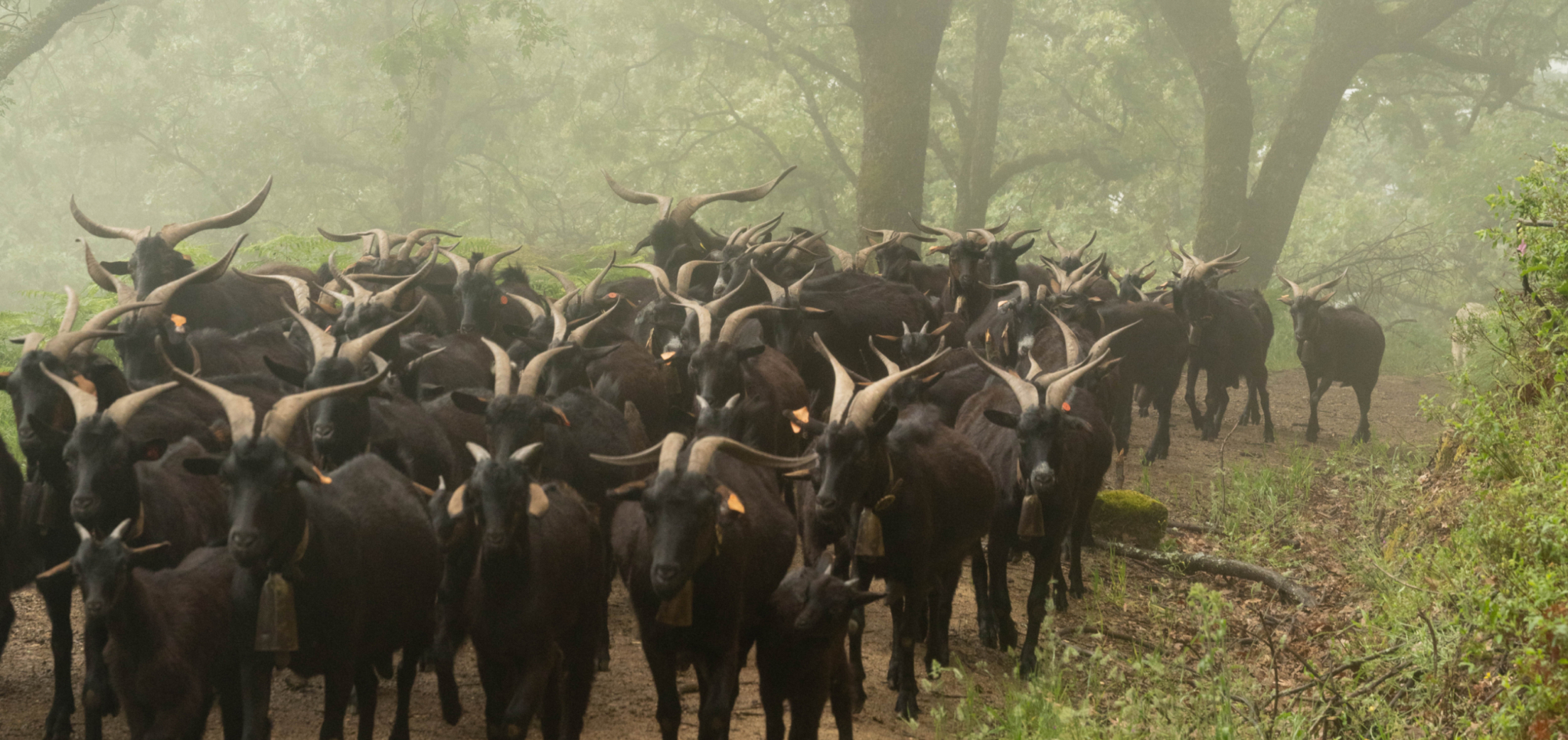
We can hear the goats before we can see them. Each one carries a bell that’s specifically tuned to match others in the herd. As they saunter up the mountain, grazing on tufts of wild grasses, joint-toothed moss, and Spanish lavender, they sound like a wind chime in motion.
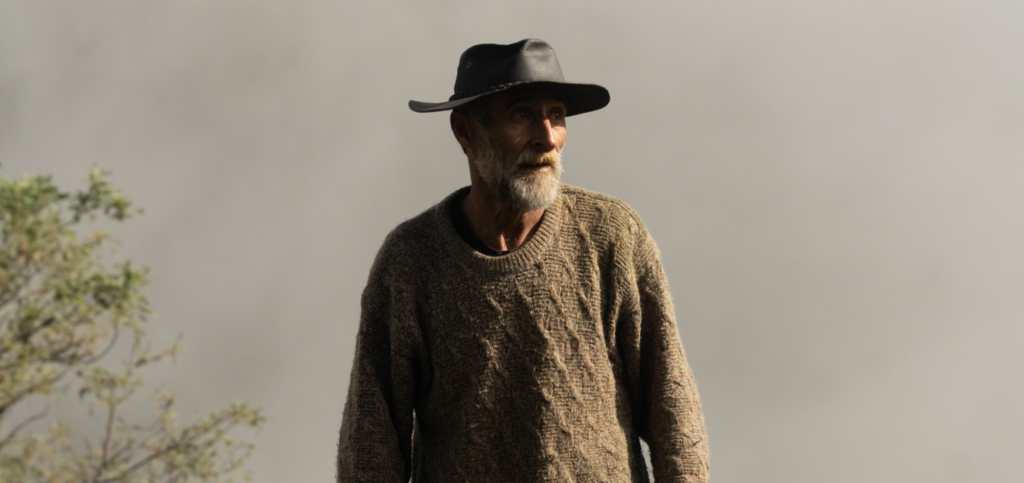
The mountains of Extremadura, a rural region in western Spain, used to be filled with the tone of thousands of native Verata goats like these, foraging on understory vegetation. Now, the 80 goats that the SeedLabs team hears on our visit are some of the last to remain. They move in dispersed unison until their herder, Óscar Delgado Sanchez—dressed in a wool sweater and knee-high boots—lets out a low whistle. The goats freeze, awaiting his instructions. A generous smile lights up his sun-worn skin, and he lifts his wooden crook as if to orchestrate the land. ‘Keep going,’ his movements tell them.
Like these goats, Delgado is one of the last of his kind in this area. Financial, political, and environmental pressures have made pastoralism a dying industry in his small town of Villanueva de la Vera. “Lamentablemente, cada vez hay menos ganado y, lo peor de todo, no hay relevo generacional; no hay gente que quiera continuar con la actividad, porque la verdad es que la rentabilidad actual es muy baja,” Delgado says, looking out over the mountains he has climbed every day, without fail, for decades. (“Unfortunately, there is less and less livestock, and the worst thing is that there is no generational interest; there are no people who want to continue with them, because the truth is that profitability right now is very low.”)
Delgado, his goats, and the landscape they care for are the focus of SeedLabs’ newest initiative. In partnership with a local research organization called SanaTerra One Health & Microbiome Living Lab, we’re supporting research into how microbiome-informed farming practices can restore degraded soils and strengthen rural ecosystems—all with the help of the microbes of the mountain.
On their daily trip up the Sierra de Gredos mountains, Delgado’s goats feast on a buffet of grasses and woody plants and shrubs. The area’s historically cool, wet winters and warm, dry summers yield an impressive diversity of plant and animal life. On SeedLabs’ visit this spring, bird songs and insect calls constantly reverberated against curtains of green.
True to the name Extremadura, this is a land of extremes—and the impacts of climate change will only make them more pronounced.1 Rising temperatures and precipitation changes are already affecting local livelihoods. Elders living in Villanueva de la Vera say that they haven’t seen rainy seasons as heavy as recent ones in over 70 years. The rain has been followed by hot, dry spells that used to last two to three months but can now span nearly six. Fernando Araujo, who has lived in town his whole life, says that his daily river swims keep getting progressively warmer, with more algae from heavy rainfall that washes nutrients into waterways. These conditions are a recipe for wildfires: Precipitation causes plants to grow rapidly, then drought puts them at risk of catching fire and spreading flame. Earlier this summer, Extremadura experienced a record 19 blazes in one week.2
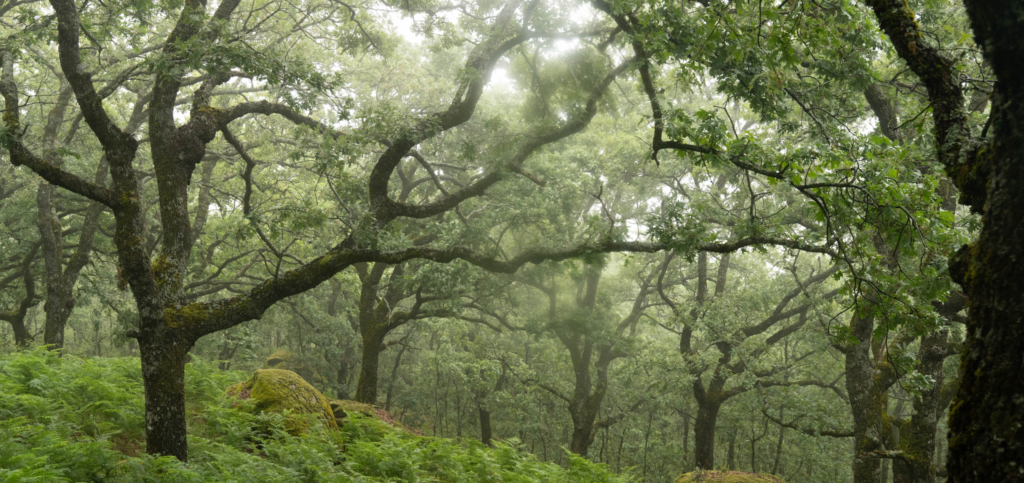
Historically, goats have helped combat the spread of unplanned fires in the region. Their voracious appetites kept understories clear of burnable weeds and low-hanging brush. However, over the last few centuries, traditional agro-silvo-pastoral systems (which combine livestock grazing, forestry, and crop cultivation) have been phased out of this region in favor of larger-scale, market-driven farms for more lucrative crops like paprika, dairy, and tobacco.
Villanueva de la Vera’s agricultural landscape is shaped by the transition from the granitic slopes of the Sierra de Gredos to the more fertile alluvial soils of the Tiétar Valley. Historically, farmers aligned their crops with this diversity. More demanding crops were concentrated in the fertile valley and along waterways, while less demanding crops such as olives and figs occupied poorer upland soils. Organic matter and livestock manure were traditionally cycled back into cultivated land, helping maintain soil fertility.
Today, changes in agricultural practices, declining livestock, and growing pressures on land and water resources are challenging this long-established relationship between farming and the landscape. This makes this a particularly relevant region in which to explore how regenerative agriculture, circular nutrient management, and the recovery of local ecological knowledge can strengthen soil health, water resilience, and rural livelihoods.
Extremadura is one of Spain’s most economically disadvantaged regions, with persistently high unemployment and significant socio-economic challenges, particularly in its rural areas. Here, perhaps even more than in other agricultural areas around the world, human livelihoods are inextricably linked to the land. Our new partner SanaTerra recognizes this interconnectedness and seeks to use it as a force for good.
‘One Health’ is an integrated approach that recognizes that the health of people, animals, plants, and the environment are deeply interconnected and interdependent.3 For Faiza Hajji, the director and co-founder of SanaTerra, it is also a framework for holistic community development.
After years of social and environmental justice work around the world, Hajji and her family settled in Villanueva de la Vera in 2021. After being introduced to Delgado through a mutual friend, she began to wonder how her experience at the intersection of microbiome science, regenerative agriculture, and community building could help Delgado and herders like him sustain their way of life by diversifying their income that comes from this land.
The result is a project that seeks to keep the historic practice of herding alive using modern scientific methods. Rather than treating environmental quality, food production, animal wellbeing, and human health as separate challenges, Hajji and her collaborators came up with a solution to improve the health of the entire system at once. Here’s the big idea:
It’s important to Hajji and her team that their data isn’t hidden away in a research paper. Instead of being limited to a sterile laboratory, the project will be conducted in a ‘Living Lab,’ defined as a dynamic, open innovation ecosystem where research and innovation unfold in a real-life, community-integrated environment.4 The science will be shaped by the people it ultimately serves.
“We have an incredible community here covering the whole value chain of the food system,” says Hajji. “Ultimately, the idea [for this project] is to create a local, inclusive, circular, resilient bioeconomy.”
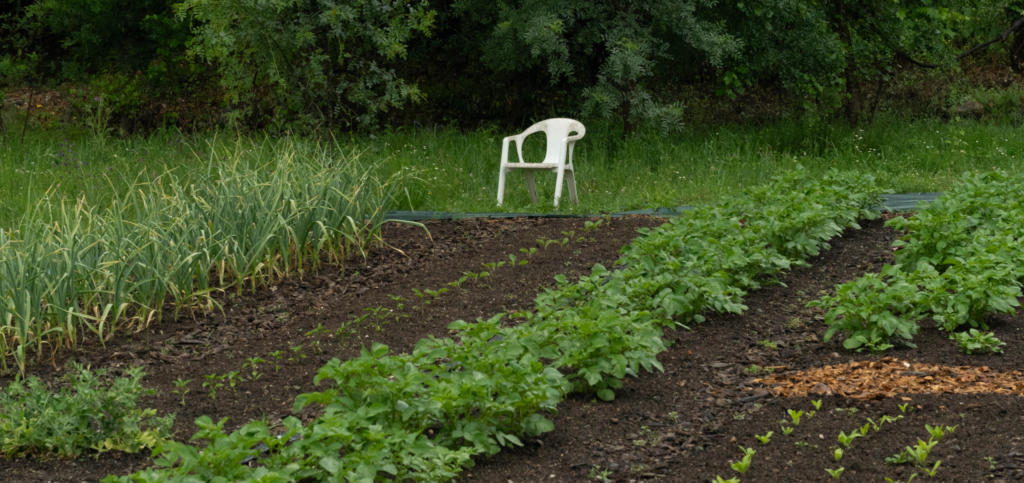
It’s a sleepy, cloudy afternoon at the homestead of Jaime Aretio, a local farmer based just outside of downtown Villanueva de la Vera. Aretio worked as a massage therapist in Madrid before moving out to the country in search of a deeper connection to nature. “Instead of healing the people, I wanted to heal the Earth,” he says. He bought his roughly quarter-acre of land a few years ago and aspires to one day grow enough food to feed himself and make a living selling to local businesses. But for now, he’s content giving his bounty away to neighbors for free—giant summer squash as a thank-you for a favor, piles of loquats fresh off the shrub to let people know he’s thinking of them.
This spirit of generosity runs through the SanaTerra project. Hajji hopes that the compost system she helps build will give producers like Aretio an accessible, affordable way to feed their land using inputs from just up the mountain.
Today, she’s gathered a group of local producers, scientists, and waste management experts on Aretio’s farm to discuss the project over lunch. They sit around a table bursting with chickpea salad, cucumber gazpacho, goat milk, and a bucket of fresh, plump cherries from Aretio’s farm for dessert. Each person takes turns sharing their expertise and perspective, and it’s clear that each one will have a hand in ensuring that the research findings help go back to this place and its people.
“It all starts with compost,” Aretio says, pointing to his meticulous garden beds planted with neat rows of arugula, spinach, and bok choy. His land was previously used to grow tobacco, and its soil was overworked and depleted of key nutrients. Over the last three years, Aretio has used regenerative management practices to, as he puts it, feed the soil without taking anything away from it. The microscopic matrix within the SanaTerra goat compost could be a perfect complement to his growing methods.
While conversations about microbes tend to focus on pathogens and disease, beneficial microbes play an essential role in food production. Healthy soil is a living ecosystem of its own, teeming with microscopic bacteria, fungi, and protists that provide plants with the nutrients they need to grow. Microbes also help strengthen soil structure, holding small particles of sand, silt, and clay together to form stable clumps that can better store water and resist erosion.
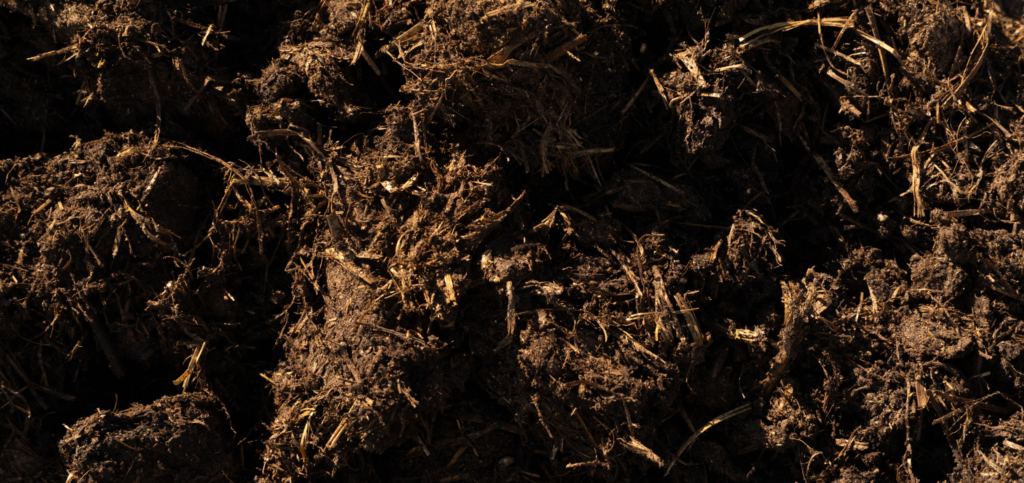
In a balanced soil system, oxygen-loving microbes (aerobes) tend to be more abundant near the surface, while microbes that thrive without oxygen (anaerobes) are more common in deeper, oxygen-poor areas. Industrial farming practices like machine tilling can disrupt these networks, reduce bacterial and fungal richness, and impact soil’s ability to both grow nutritious food and store carbon underground.5
Applying a layer of biologically active, nutrient-rich compost has the opposite impact and can go on to improve soil structure over time. The SanaTerra project will test the hypothesis that compost made with Verata goat manure is an especially effective additive due to the manure’s unique physical and microbial properties. (Goat manure is pelletized and relatively dry compared to other compost inputs, which could help improve gas exchange underground. And since local goats feed on biodiverse wild brush, their manure is likely rich in microbial diversity and phytochemicals, which could yield a more balanced and productive soil food web.)
Patricia Jiménez, a microbial lab technician certified by the Soil Food Web School, will be observing the goat compost samples under a microscope and measuring elements like how much beneficial bacteria they have, how expansive their fungal networks are, and if they contain any nematodes that feed on detrimental microbes. “Healthy soil is not simply a substrate that contains nutrients, oxygen, and water,” Jiménez says. “It is a living ecosystem. Its microbial abundance, diversity, and activity are key to its fertility, to its resilience, and to its capacity to support healthy plants and animals.”
In true One Health fashion, feeding landscapes with compost also goes on to help feed people. Research shows that crops grown in regenerative systems that prioritize soil health tend to be more nutrient-rich than those grown conventionally, and they may positively influence the gut microbiome of those who consume them.6,7
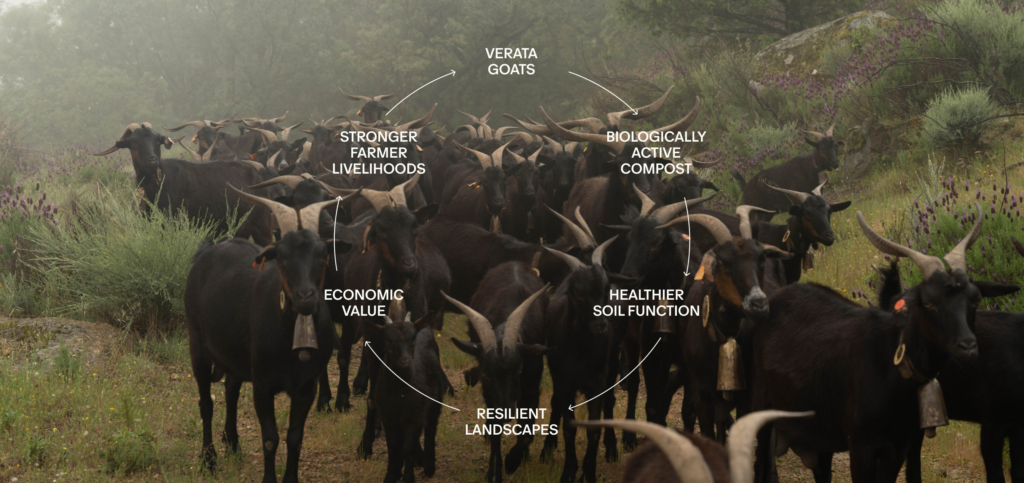
Using financial, communication, and capacity-building support from SeedLabs, Hajji is now refining the project’s experimental design and preparing for the compost treatments. “The partnership with Seed is so exciting,” says Hajji. “It will help us scale up our work, but also our impact, and give even more credibility to our science-based, place- and people-based approach.”
As the impacts of climate change are felt globally, protecting local biodiversity in all its forms—from aboveground to below, from natural systems to the humans who tend to them—is essential. This project represents a deeply place-based approach to wildfire resilience, ecological restoration, and food security, and its findings could be scaled well beyond Extremadura.
By using modern microbial science to keep ancestral knowledge alive, the SanaTerra project seeks to help protect a vulnerable region as it heads into an unknown climate future. Stay tuned for more stories and discoveries from the mountains of Spain as the year goes on.

Digging into the soil biome—home of the bacteria, fungi, and protists that form the foundations of modern agriculture.
Methane is up to 86 times more powerful than CO2 in the short term. Could bacteria help us mitigate the super pollutant?
One hundred miles southwest of Tokyo, a volcanic island rises from the depths of the Philippine Sea.