Next Article
The Truth About Gut-Healthy Foods (and What to Skip)
6 minutes
When you're searching for the best prebiotic and probiotic combo, there's so much more to consider than CFU counts. Discover the science behind synbiotics, fermentable fiber types, and delivery technology that actually works.
You’re standing in the wellness aisle, trying to decode labels that sound more like math problems than health solutions. One bottle screams “50 Billion CFUs!” Another lists “30 Unique Strains!” And yet another proudly announces it now includes prebiotics. At that point, even the kombucha in your cart is starting to look like the simpler choice.
But here’s the catch: these numbers and buzzwords don’t always translate to something that actually supports your gut. A flashy CFU count or trendy ingredient isn’t enough. What really makes a difference is how these pieces work together—probiotic strains with specific, clinically studied functions, prebiotics that support their growth (without triggering a digestive mutiny), and smart delivery tech to get them where they need to go.
Let’s zoom in on what a truly effective combo looks like—and how to pick the one that’s worth your gut’s time. 🦠
Prebiotics and probiotics can work together like a tag team, but each plays a distinct role. Think of probiotics as the guests of honor at a microbial dinner party—they’re the ones you invite to do something specific. Prebiotics? They’re the catering—specialized foods that only those guests can eat, helping them feel welcome and energized to do their best work. 🍽️
Scientifically, probiotics are defined as live microorganisms that “when administered in adequate amounts, confer a health benefit on the host”.1 So, essentially, they’re living microbes; in order for them to actually work, you need enough of the right ones in your system and—more importantly—they need evidence from human trials.
What matters most is strain specificity. Just like “dog” tells you less than “Golden Retriever,” and way less than “Gus, your neighbor’s pool-loving Golden,” the term “Lactobacillus” on a label doesn’t guarantee effectiveness. The right strain—identified by a full name like Lactobacillus plantarum SD-LP1-IT—is what gives the probiotic its job description. No last name? No proof of function.
Prebiotics are the fuel, selectively used by microbes in your gut to help produce a health effect. But not all prebiotics work the same way—or for everyone.
These include inulin, FOS (fructo-oligosaccharides), and GOS (galacto-oligosaccharides). They’re classic prebiotics that help many types of bacteria thrive and produce beneficial short-chain fatty acids (SCFAs).2,3 But they’re also known for causing some…extra activity in the gut. (i.e., gas and bloating)
In preclinical research, these plant-based compounds are transformed by specific gut microbes into bioactive, health-supporting metabolites.4 These aren’t broadly fermented, so they’re less likely to trigger digestive upset.
In practical terms, that means not every fiber-filled prebiotic is ideal for everyone. And more isn’t always better—it’s about matching the right input to your unique microbial system.
Before reaching for a precision-dosed synbiotic, it helps to know that you’re probably already eating some prebiotics—without even trying. Foods naturally rich in prebiotic fibers include garlic, onions, leeks, asparagus, slightly underripe bananas, oats, legumes, and Jerusalem artichokes. These deliver small amounts of inulin, FOS, and other fermentable fibers that gently support the resident microbes already calling your gut home.5
That said, food sources tend to provide variable—and usually lower—amounts of prebiotic compounds than a precision-dosed synbiotic. Your diet is a great starting point, but for targeted prebiotic support at clinically relevant doses, a thoughtfully formulated synbiotic can fill the gap. 🌱
A quick clarification while we’re talking about food: fermented foods like yogurt, kefir, kimchi, and sauerkraut can be wonderful additions to your diet—but they’re not the same as a clinically studied probiotic. Per the ISAPP (International Scientific Association for Probiotics and Prebiotics) definition, just because something contains live microorganisms doesn’t mean it qualifies as a probiotic.1 Probiotics require defined strains, specific doses, and specific health benefits shown in clinical trials. Fermented foods contain variable, often uncharacterized microbes at inconsistent amounts. Love your morning yogurt? Keep loving it—just know it’s doing something different than a strain-specific probiotic.
Pairing a probiotic with a prebiotic doesn’t just check two boxes—it unlocks the potential for them to do more together than they could on their own. That’s the concept behind a synbiotic.
The ISAPP defines synbiotics as “a mixture comprising live microorganisms and substrate(s) selectively utilized by host microorganisms that confers a health benefit on the host.”6 Put simply, it’s a thoughtful pairing of beneficial microbes and the nutrients they love to feed on.
But not all synbiotics are built the same way—and there’s more nuance than most labels reveal.
🌱 Let’s break this down with a garden metaphor:
Both types are valid. But understanding the difference can help you make smarter choices (and sidestep flashy but vague marketing).
Here’s how to separate what’s scientifically smart from what’s shelf filler.
The type of prebiotic matters, especially if you’ve had trouble with gas or bloating from fiber-heavy formulas.
According to Dirk Gevers, Ph.D., Seed’s Chief Scientific Officer, “Prebiotics are often treated as basic fuel, like fiber. But that’s a simplified view. Seed uses a polyphenol-based prebiotic derived from Indian pomegranate that doesn’t ferment like fiber. Instead, gut microbes transform it into bioactive compounds that support systemic health. It’s not just feeding bacteria—it’s programming them to produce beneficial metabolites.”
In preclinical studies, punicalagins were shown to be metabolized by specific gut microorganisms into smaller bioactive compounds such as ellagic acid and various urolithins.7 In a clinical trial, this prebiotic was associated with markers of healthy skin and a balanced skin microbiome via the gut-skin axis.8
It’s a gentle but potent approach for those who’ve felt overwhelmed by traditional fiber-focused blends. 💡
Probiotics only help if they survive the trip through your stomach. Acid, enzymes, and heat can all kill them off before they get to your colon.
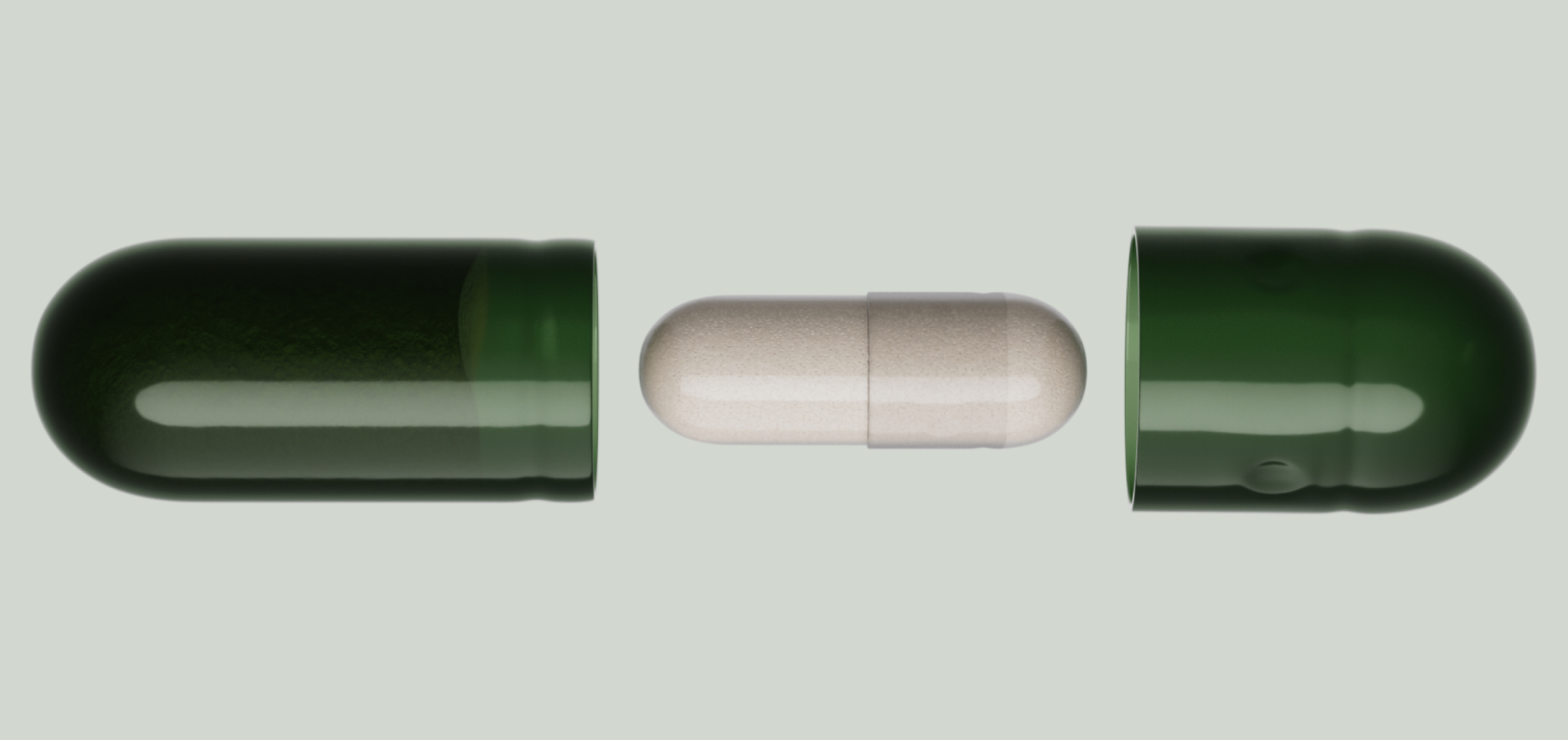
For example, Seed’s DS-01® Daily Synbiotic uses ViaCap® — a capsule-in-capsule delivery system that, in SHIME® in vitro testing, safeguards strains through digestion to reach the colon. It’s not just fancy packaging—it’s a key part of the formula’s effectiveness.
Beyond delivery technology, what happens behind the formula matters too. Rigorous synbiotics undergo extensive quality testing—including potency verification, purity screening, and stability checks. Third-party testing by independent labs adds another layer of confidence. Look for products that guarantee viability through the expiration date, not just at the moment of manufacture. (For context: Seed’s DS-01® goes through 50+ quality control checkpoints from raw material to finished bottle.)
Without strategic protection, your probiotics might be DOA. ☠️
And here’s something else most people don’t realize: the science behind probiotics is highly specific.
As touched on previously, each probiotic is named using a three-part system—genus, species, and strain (think: Bifidobacterium longum BB536). This naming might look technical, but it’s crucial—just like no two dog breeds are alike, different strains (even from the same species) can have very different effects.
Take B. longum as an example—it includes hundreds of strains, but only certain ones, like BB536, have been studied at the strain level in clinical research for digestive regularity support.9 Without strain-level identification, there’s no way to confirm the benefit.
Here’s where it gets really interesting: different parts of a synbiotic bring different strengths to the table. On the probiotic side, at the strain level, certain Lactobacillus and Bifidobacterium strains have been studied in clinical research for immunomodulatory effects—including changes in inflammatory markers and immune cell signaling.10
On the prebiotic side, in preclinical research, certain polyphenol-derived microbial metabolites were shown to support the tight-junction proteins that help maintain the intestinal lining.7 Formulated with strains that support healthy immune function—and prebiotics that fuel beneficial metabolite production—a thoughtful synbiotic may offer layered support across multiple systems your gut helps influence.
So, when you spot a full strain name on a product label, you’re not just seeing fine print—you’re seeing scientific credibility. Together, strain-specific identification and delivery technology are what separate a truly effective probiotic from one that’s just flexing in the fridge aisle.
It’s tempting to equate big numbers—like “100 Billion CFUs!”—with bigger benefits. But science says otherwise.
More isn’t automatically better. What matters is using the right strains at the right dose, and making sure those cells are alive and active. That’s why Seed uses AFU (Active Fluorescent Units), not just CFU, to measure live strains—because it accounts for viability, not just quantity.
The goal isn’t volume, it’s validation. In clinical research, the right dose isn’t the biggest one—it’s the one that’s been studied for the specific outcome. Anything more is just microbial noise.11
Think of starting a synbiotic like introducing your gut to new neighbors—there might be a brief adjustment period as everyone settles in. During the first few weeks, mild and temporary GI changes (small shifts in stool patterns, mild bloating, or a little extra gas) are normal and generally confined to the digestive system. This is what Seed and the broader scientific community refer to as a temporary acclimation period—not a “cleanse” or a “die-off.”
Most people find these effects ease within 2–4 weeks as the system adjusts.12 If you’d rather ease in, starting with a single capsule for the first week and working up to the full dose can soften the transition. Consistency is what really matters—benefits build over time with daily use, not from one big push. 🌿
For most healthy adults, prebiotics and probiotics are generally well-tolerated. According to current evidence, there are no known contraindications between probiotics and most dietary supplements—but a few situations call for a conversation with your healthcare provider first.13
If you’re pregnant or nursing, talk to your provider before starting any new probiotic. The same goes if you’re immunocompromised or taking prescription medications (particularly immunosuppressants)—your doctor can help you weigh what’s right for your situation. When in doubt, your healthcare provider is the best resource for personalized guidance.
Next time you’re staring at a shelf full of options, here’s what actually matters:
When it comes to choosing the best prebiotic and probiotic combo, don’t be swayed by the boldest claims or the biggest numbers. What really matters is scientific accuracy and biological compatibility. A truly effective synbiotic includes specific probiotic strains with clinical backing, a prebiotic designed to fuel the right microbial actions, and a delivery system that ensures it all gets where it needs to go—alive and active.
Forget gut health guesswork. Choose a product that treats your microbiome like the intricate ecosystem it is. Good health isn’t a numbers game—it’s seeded in science. 🌱
Probiotics are live microbes; prebiotics are the fuel they use. Probiotics support health when taken in the right amounts. Prebiotics feed beneficial microbes already living in your gut. For example, a probiotic might be a specific strain like Lactobacillus rhamnosus, while a prebiotic could be inulin fiber from chicory root or polyphenols from pomegranate. Think of probiotics as the skilled workers and prebiotics as their customized toolkits—they work differently, but together they may give your gut a more complete support system.
Yes—this is a synbiotic. The term is formally defined by the International Scientific Association for Probiotics and Prebiotics (ISAPP). A scientific consensus review by ISAPP found that pairing a probiotic with a prebiotic can offer benefits beyond what either provides alone—particularly when the two are designed to work in synergy.6
Together, they can offer benefits that either alone might not. Some synbiotics pair generally helpful components, while others work in tight synergy, maximizing the probiotic’s specific actions. In fact, many experts recommend this approach for comprehensive gut support.
Yes! If you want comprehensive support, a synbiotic like Seed’s DS-01® can be a smart choice. Whether you’re aiming for regularity, microbiome resilience, or a targeted digestive support, a synbiotic studied in a randomized clinical trial — like DS-01®, which was evaluated in a 6-week RCT in over 300 adults — can offer a strong foundation for specific goals.14
Nope—formulations vary widely. Strain quality, prebiotic types, dosages, and delivery tech all differ. Not all synbiotics will deliver the same results—or even survive digestion the same way. Always check for full strain names, clinical backing, and delivery protection.
Honestly? Whenever you’ll actually remember to take it. Consistency matters more than precise timing. That said, taking your synbiotic on an empty stomach (or 15–30 minutes before a meal) may help optimize delivery, since less stomach acid is present. Try attaching it to an existing daily habit—your morning coffee, brushing your teeth, your evening wind-down.
For DS-01®, Seed recommends taking 2 capsules daily at the same time, every day.



How do the antimicrobial products you’re using to scrub your home affect your microbiome? We’re digging into the dos and don’ts of cleaning with the help of Dr. Cezmi Akdis.
Overview Gut health is central to how your entire body functions. That’s because living inside your colon is a microscopic metropolis: trillions of microbes that interact constantly with your immune system, metabolism, hormones, and even your brain. So when you hear “gut health,” think whole-body health—with your daily diet at the controls. And while social...

Overview Have you ever tossed yogurt or a bottle of kombucha into your cart just because the label promised “probiotics”? 🛒 You’re not the only one. But what if this isn’t the best approach? With so many foods advertising live cultures, it’s tempting to assume your gut is in good hands. Are all these so-called...